Category
Garage Heaters
Heating a garage is an electrical or gas question before it is a product question. Start with what your panel and your gas line can actually supply, then pick the heater.
Heads up: buy through a link here and we earn a commission from Amazon, at no extra cost to you. It never changes which product we rank first — how that works.
Ranked picks
What to buy, and what it costs today
Every tile below shows its top pick with a live Amazon price, so you can act from this page without digging through a review first.
Best garage heater
The Best Garage Heaters
Ten heaters across electric, propane and gas, ranked on published output against coverage and on what the install actually requires.
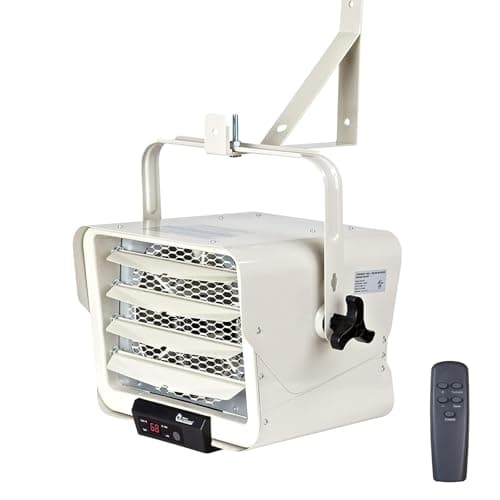
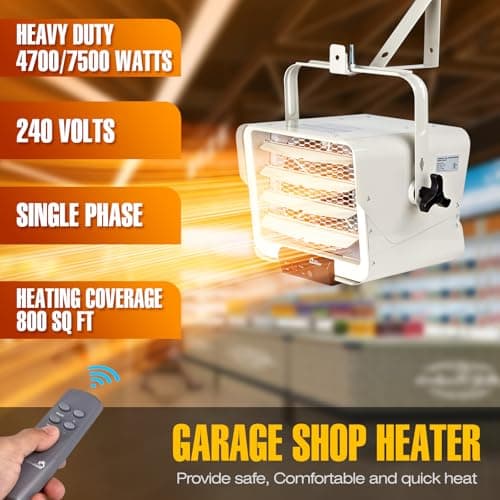
Top pick: Dr. Infrared Heater DR-975 7,500W 240V Hardwired Heater
Best electric heater
The Best Electric Garage Heaters
Seven 240V electric heaters compared on published output, breaker and wire requirements, thermostat range and mounting options.
Top pick: Dr. Infrared Heater DR-975 7,500W 240V Hardwired Heater

Best propane heater
The Best Propane Garage Heaters
Forced-air propane heaters compared on published BTU and coverage, whether they have a thermostat, and the ventilation requirement stated by the makers.
Top pick: InoKraft MAXHEAT MH85 85,000 BTU Propane Heater
Best gas heater
The Best Natural Gas Garage Heaters
Natural gas unit heaters and radiant options compared on published thermal efficiency, BTU, coverage and what the vent install requires.
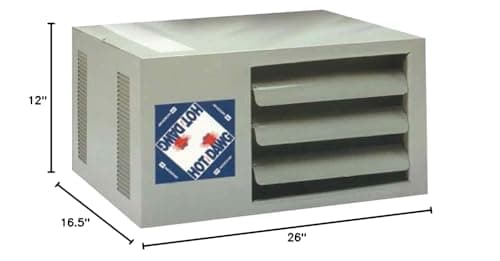
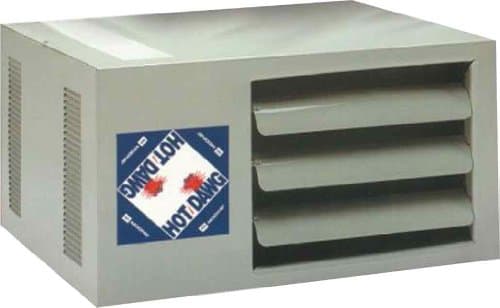
Top pick: Modine Hot Dawg HD45 45,000 BTU Natural Gas Heater
Best 120V heater
The Best 120V Garage Heaters
Plug-in 1,500W heaters compared on published coverage, IP rating and mounting — framed honestly as comfort zones rather than garage heating.
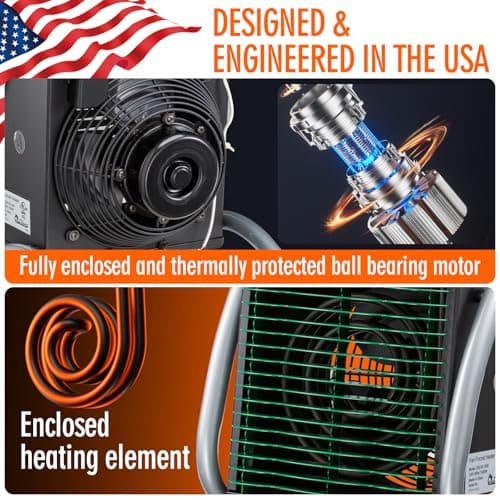
Top pick: Dr. Infrared Heater DR218 1,500W Infrared Heater
Start with your panel, not with the product
Every other category on this site starts with what you want. This one starts with what your garage can supply, because the most common way to waste money on a garage heater is to buy one your electrical panel cannot feed.
Three questions, in order:
- Do you have 240V in the garage, or spare capacity in the panel to run it? If yes, electric is on the table. If no, you are looking at gas, propane, or a 1,500W comfort heater and honest expectations.
- Is there a gas line, or could there be? A vented natural-gas unit heater is the cheapest heat to run and the most expensive to install. If the line already exists, the arithmetic changes completely.
- Is the garage insulated? If not, fix that before buying any heater. Heating an uninsulated garage is pouring money through the walls, and the fix is cheaper than the heater. See how to insulate a garage for heating.
What each fuel actually costs to install and run
| Type | Install | Running cost | Best for |
|---|---|---|---|
| 120V electric, 1,500W | Plug it in. Nothing. | Low total, because the output is low | A comfort zone at the bench, 150-250 sq ft |
| 240V electric, hardwired | An electrician, a dedicated 30-42A circuit, 8 AWG wire | Highest per BTU delivered | A garage with panel capacity and no gas |
| 240V electric, NEMA 14-50 plug | None IF you already have an RV or EV outlet | Same as hardwired | Garages that already have a 50A receptacle |
| Portable propane | A tank, a hose, an open door | High, and the tank empties fast | Heating a cold garage fast before you work |
| Vented gas unit heater | Gas line, vent, 120V supply, a contractor | Lowest — 80-83% efficiency on cheap fuel | Holding temperature all winter |
| Vent-free gas | Gas line only, no vent | Low | Gas heat where a vent is impossible — check local code |
The pattern: install cost and running cost move in opposite directions. The cheapest heater to buy is the most expensive to run per unit of heat, and the most expensive to install is the cheapest to run. Which one wins depends on how many hours a year you actually heat the garage.
The 1,500W reality check
A standard 15A household outlet supports about 1,500W, and that is a hard ceiling. Two products here publish what 1,500W does: Dr. Infrared's DR218 states 150 sq ft of coverage, and Dura Heat's EUH1500 states 250 sq ft and 5,120 BTU.
A 2-car garage is 400-500 sq ft. So a plug-in heater is not a garage heater — it is a comfort zone. Used that way, mounted over the bench, it is genuinely useful and costs almost nothing to install. Expected to heat the room, it will disappoint on the first cold day. The honest options are on the best 120V garage heaters.
240V electric: the sweet spot for most garages
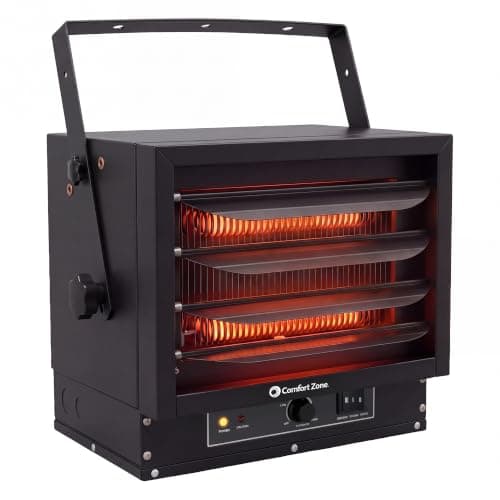
If your panel can feed it, a 240V ceiling-mounted electric heater is the best balance in this category: no vent, no gas line, no combustion products, no open flame near your fuel cans, and a thermostat that holds a temperature without supervision.
The two specs worth hunting for are the breaker rating and the wire gauge, because they determine whether the install is a $200 job or a $1,500 one. Almost nobody publishes either. VEVOR publishes a ≥42A breaker requirement for its 10,000W unit; Dr. Infrared publishes 8 AWG copper for its 7,500W. Everyone else leaves you to find out from an electrician.
One genuinely clever option: InoKraft's 7,500W unit ships with a NEMA 14-50P plug. If your garage already has an RV or EV-charger outlet, that is a 7,500W heater with no electrician at all. The ranked electric picks are on the best electric garage heaters.
Gas: cheapest to run, hardest to install
A vented natural-gas unit heater is what a heating contractor installs in a garage, and the efficiency figures are why: Modine publishes 80% and Reznor publishes 83% thermal efficiency, on fuel that costs a fraction of electricity per BTU. Both mount from the ceiling, both take an ordinary 24V thermostat, and both will hold a garage at temperature all winter without you thinking about it.
The cost is the install: a gas line, a vent through the wall or roof, a 120V supply, and a contractor to do it. Reznor's listing is helpfully explicit about the vent categories it accepts, which is exactly what your installer needs to quote.
Mr. Heater's dual-fuel unit heaters (50,000 and 80,000 BTU) sit between the two worlds: they run on propane or natural gas, cost a third of the Modine or Reznor, and take the same 24V thermostat. Full picks on the best natural gas garage heaters.
Propane: for fast heat, not for holding temperature
Nothing else here takes a freezing garage to workable in minutes. A 125,000 BTU forced-air propane heater will do in ten minutes what a 5,000W electric heater does in two hours. That is a genuine and useful capability.
It is also unvented combustion, which means the door stays open, which means you are heating a room with a hole in it. Propane is the right tool for 'I want to work in here for three hours this afternoon' and the wrong tool for 'I want the garage to be 55°F all winter'. InoKraft's MH85 is the one to look at if you want a thermostat on propane — it cycles the burner instead of running flat out, which makes it usable for an afternoon rather than a blast. See the best propane garage heaters.
Where to start
Size it first on the garage heater sizing guide, then price the running cost on garage heater running costs, then pick from the best garage heaters. If you are weighing a heater against a mini-split, garage heater vs mini-split covers the real comparison, and the electric vs gas page does the fuel math.
One last thing worth knowing: heat and floor are a pair. An uninsulated slab is a heat sink, which is why radiant heaters that warm the floor behave differently from fan-forced heaters that warm the air. If you are doing both, read garage flooring at the same time, and see how both fit into garage setup under $2,500.
Head to head
The decisions that actually split this category
Fuel head-to-head
Electric vs Gas Garage Heaters
Electric and gas compared on install requirements, published efficiency, running cost, safety and what each one does to the air in your garage.
Top pick: Modine Hot Dawg HD45 45,000 BTU Natural Gas Heater
Heater vs heat pump
Garage Heater vs Mini-Split
Where a mini-split beats a dedicated garage heater, where it does not, and the insulation requirement that decides it.
Top pick: Dr. Infrared Heater DR-975 7,500W 240V Hardwired Heater
Guides
Questions worth answering before you spend
Quick answer
What Size Heater Do You Need for a Garage?
A BTU-by-square-footage-and-insulation table, cross-checked against each heater's own published coverage figure, with the electric equivalents in watts.
Top pick: Comfort Zone CZ220 5,000W Ceiling Mount Heater
Quick answer
Garage Heater Running Costs
Energy consumed per hour by fuel and output, derived from published specs, plus the three things that cut running cost more than fuel choice does.
Top pick: Modine Hot Dawg HD45 45,000 BTU Natural Gas Heater

Quick answer
Is a Garage Heater Worth It?
A direct answer in 50 words, then the four conditions that make a heater worth it and the two situations where the money goes further elsewhere.
Top pick: Comfort Zone CZ220 5,000W Ceiling Mount Heater

Guide
How to Insulate a Garage for Heating
Where heat leaves a garage, the order to fix it in, and how much insulating changes the heater you need — plus the ceiling-height problem.
Top pick: Comfort Zone CZ220 5,000W Ceiling Mount Heater
Questions people actually ask
What size heater do I need for a 2-car garage?
For a roughly 400-500 sq ft insulated garage, the published coverage figures point to 5,000W on 240V electric, or 50,000-60,000 BTU on gas or propane. Below that you will be fighting the cold; far above it and a gas unit heater will short-cycle. The full worked table by square footage and insulation level is on the garage heater sizing guide.
Can I run a garage heater on a normal wall outlet?
Only a 1,500W one, and 1,500W does not heat a garage. Dr. Infrared publishes the honest figure for that class: 150 sq ft of coverage. Dura Heat publishes 250 sq ft and 5,120 BTU. Those are a corner of a garage or a comfort zone at the bench, not garage heating. Anything that genuinely heats a 2-car garage needs 240V or gas.
What breaker does a 240V garage heater need?
VEVOR is the only maker here that publishes it: its 10,000W unit requires 42A or more. As a rule of thumb, 5,000W at 240V is around a 30A circuit and 7,500W is around 40A. Dr. Infrared publishes the wire instead — 8 AWG copper for its 7,500W DR-975. Check your subpanel's spare capacity before you choose a wattage, because that is the constraint, not the price.
Are electric garage heaters expensive to run?
Electric resistance heat is 100% efficient at the heater and expensive per unit of heat delivered, because electricity costs more per BTU than gas almost everywhere in the US. A 7,500W heater draws 7.5 kWh per hour of full-output running — multiply by your own rate per kWh for your number. Gas unit heaters run at 80-83% efficiency (Modine publishes 80%, Reznor 83%) on much cheaper fuel. Worked arithmetic is on garage heater running costs.
Is a portable propane heater safe in a garage?
Only with real ventilation, and the makers say so. Mr. Heater's listing specifies well-ventilated spaces. Unvented propane combustion puts water vapor and combustion products into the garage, which means the door has to be open — and an open flame in a room containing gasoline and solvents needs genuine care. Portable propane is for warming a space fast before you work in it, not for holding temperature all winter.
Is a garage heater worth it at all?
If you use the garage for more than parking during cold months, almost certainly. If you are heating an uninsulated garage, insulate first — heating a space that loses heat as fast as you add it is the most expensive mistake in this category. The honest answer, with the conditions spelled out, is on is a garage heater worth it.
Sources
- VEVOR 10,000W garage heater listing — Source of the published 42A minimum breaker rating — the only breaker figure published in this group.
- Dr. Infrared DR-975 listing — Source of the 8 AWG copper wire requirement and the 4,700W / 7,500W dual output figures.
- Modine Hot Dawg HD45 listing — Source of the published 80% efficiency figure for natural gas unit heaters.
- Reznor UDXC-60 listing — Source of the 83% thermal efficiency figure and the published vent category requirements.