By Budget
Organizing a Garage Full of Tools
A different problem from a cluttered garage. Here the issue is too many tools and no system, and the fix is sorting by frequency before buying anything.
By Mike M. · Published October 5, 2026
Heads up: buy through a link here and we earn a commission from Amazon, at no extra cost to you. It never changes which product we rank first — how that works.
The short answer
- Get every tool out where you can see it. All of it, on the floor or a bench.
- Sort by FREQUENCY, not by type — hourly, weekly, occasional, rarely.
- Hourly tools go on a wall at chest height. Never in a drawer.
- Weekly tools go in the top drawers of a chest, shallow and near your hands.
- Occasional tools go in lower drawers, grouped by family.
- Cordless tools and batteries go on a powered wall rack, together with the charger.
- Loose hardware goes in bins, one system, labeled as you fill them.
- Long awkward things go on the wall unless you have a full-width drawer.
This is a different problem
A cluttered garage and a garage full of tools look similar and need different answers. A cluttered garage has too much stuff and not enough storage. A tool-heavy garage has the right amount of stuff, no system, and a tool collection that has outgrown wherever it was put.
The symptom is specific: you own a tool, you know you own it, and you cannot find it. Buying more storage rarely fixes that; sorting does.
Sort by frequency, not by type
This is the whole method and it is counter-intuitive. The instinct is to group by category — all screwdrivers together, all sockets together, all electrical together — which produces a tidy garage you then fight, because the ten tools you use constantly end up spread across six locations.
Sort by how often you reach for something, and group by type within each frequency band.
| Frequency | Examples | Where it goes |
|---|---|---|
| Hourly | Screwdrivers, pliers, tape measure, utility knife, markers | On a wall at chest height. Never a drawer |
| Weekly | Sockets, ratchets, wrenches, hex keys | Top shallow drawers of a chest, in trays |
| Occasional | Multimeter, crimpers, files, squares, levels | Middle drawers, grouped by family |
| Rarely | Specialty tools, the thing you bought for one job | Bottom drawers or a high shelf |
| Cordless + batteries | Drills, drivers, saws, chargers | A powered wall rack, all together |
| Loose hardware | Screws, nuts, washers, fittings, connectors | Bins, one system, labeled |
| Long and awkward | Levels, pry bars, long extensions, breaker bars | Wall, or a full-width drawer |
The hourly tools must not be in a drawer
This is the single biggest change. If you reach for a tool forty times in an afternoon, opening a drawer forty times is forty wasted movements and a guaranteed reason to leave it on the bench instead — which is how the bench ends up covered.
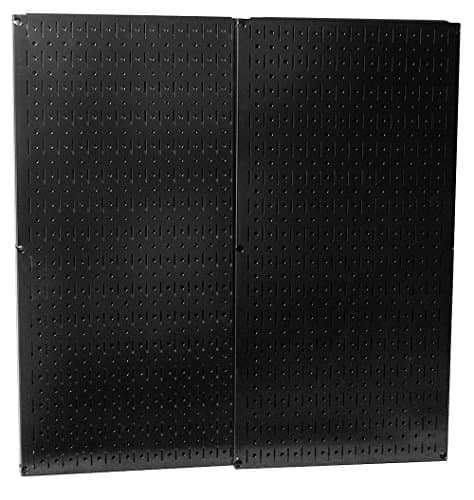
Those tools go on a metal pegboard at chest height, above the bench. Metal, not hardboard: hardboard holes fray within a year of real use and hooks start falling out. Wall Control publishes a pre-formed 3/4 in. standoff flange, which is what makes a loaded hook seat properly instead of tipping.
Trace each tool on the board with a marker. An empty outline tells you at a glance what is missing, which is the whole reason to put tools on a wall instead of in a drawer. See the best pegboard for a garage and how to install pegboard in a garage.
The chest, loaded by weight
With the hourly tools on the wall, the chest holds the weekly and occasional ones — and the loading rule is simple: heaviest at the bottom.
That is both a stability rule (a tall chest on casters with weight at the top tips, and it tips toward you when a drawer is open) and a capacity rule. Per-drawer ratings are per drawer: a chest rated 100 lb per drawer is not a chest you put 400 lb in one drawer.
Which is the argument for buying a chest that publishes a rating. WEN's GG532B publishes nine lockable 100 lb soft-close drawers on 21-gauge steel; CRAFTSMAN's S2000 publishes 100 lb and 18-20 gauge. Most of the budget tier publishes nothing — see the best tool chests for a garage and how to organize a tool chest.
Cordless tools are their own problem
A cordless collection has three parts that belong together — the tool, its batteries, and the charger — and the charger needs power. No tool chest solves that, which is why cordless tools end up in a heap near an outlet.
POKIPO's wall rack publishes 600 lb capacity, an integrated 4-outlet strip with a 6.5 ft cord, eight drill slots, six shelves and side drill-bit racks. One wall unit, whole problem solved — and the bit racks address the thing that otherwise disappears permanently.
Mount it into studs, and spread four chargers across circuits rather than loading one. CRAFTSMAN's charging carts do the same job on wheels if you prefer that.
Loose hardware: the real time sink
Screws, nuts, washers, fittings, connectors, zip ties. This is the category that defeats every other storage solution — too small to shelve, too numerous to hang — and sifting through a drawer of mixed fasteners is the single biggest time-waster in a garage.
The answer is bins, standardized, labeled. Akro-Mils 30230 publishes 30 lb per bin — the only bin rating in this category — hangs on louvered panels as well as stacking, and has dividers and label holders as cataloged accessories. That is a system you can still be adding to in a decade.
A cheaper route: a pegboard accessory kit with bins included. ELEAD's 297-piece publishes twenty bins plus the peg locks that bridge 1/8-inch hooks to a 1/4-inch board. See pegboard hooks and accessories.
The long awkward things
Levels, pry bars, long extension bars, breaker bars, pipe wrenches. These fit no normal drawer and end up propped in a corner.
Two answers. A full-width drawer — biosplot's 46-inch chest is the only one on this site with one. Or the wall: a rail with sliding hooks, or braced hooks, which also handles rakes and brooms. See the best garage wall hooks.
The build
What a tool-heavy garage actually needs
Pegboard for the hourly tools
Wall Control Metal Pegboard Pack, 2 x (32 x 16 in.) (30-P-3232B)
The pegboard worth buying. The pre-formed flange and steel holes are why your tools still hang straight in five years, and it takes generic pegs too.
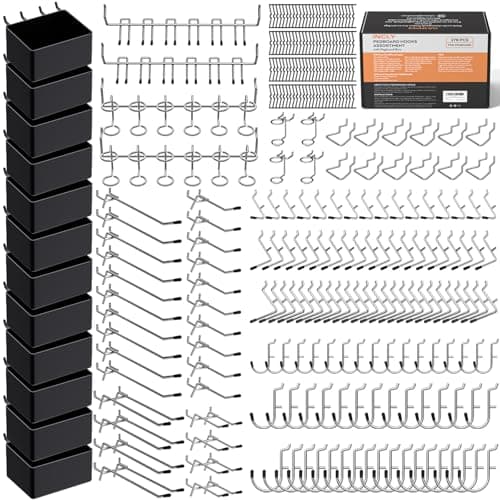
Hooks and bins, with peg locks
INCLY 278-Piece Pegboard Accessory Kit
The kit to buy with a board, because it includes the peg locks that bridge 1/8-inch hooks to a 1/4-inch board. Twelve bins is what makes it more than hooks.
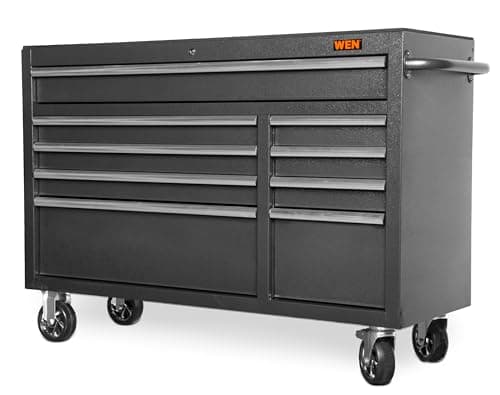
Chest, nine 100 lb drawers
WEN 52" Premium Rolling Cabinet (GG532B)
The value pick in the documented tier: 100 lb per drawer and a published gauge, for meaningfully less than CRAFTSMAN. Thinner steel is the trade.
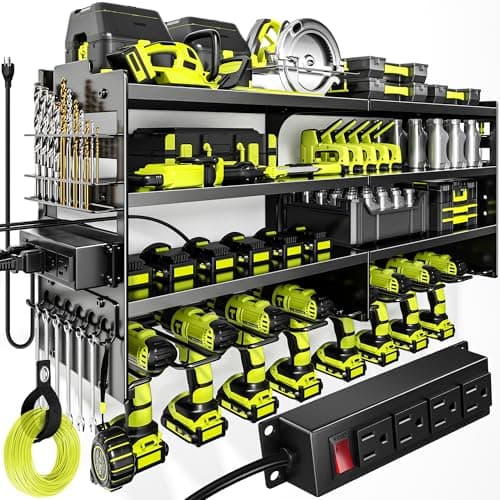
Cordless tools, batteries and charger together
POKIPO 4-Tier Power Tool Rack with Charging Station
The right wall unit for a cordless-tool collection: tools, batteries and chargers in one place with outlets built in. Mount it into studs and spread the chargers across circuits.
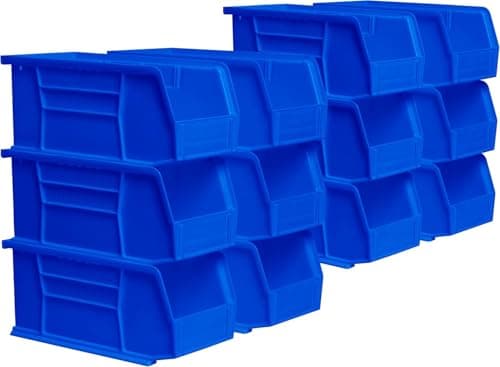
Hardware bins, 30 lb each
Akro-Mils 30230 AkroBins, 11 x 5 x 5 in., 12-Pack
The small-parts bin to standardize on. A published per-bin rating, louvered-panel mounting and real label holders — the only one here that is a system rather than a tub.
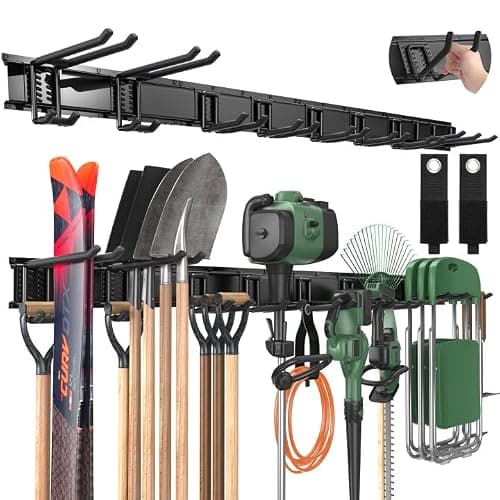
Long awkward things, on a rail
LBT 66" Tool Rail, 720 lb
The best rail here for long-handled tools: 66 inches, sliding hooks and a published 9 mm hook diameter. Ask for the per-hook figure before hanging anything precious.
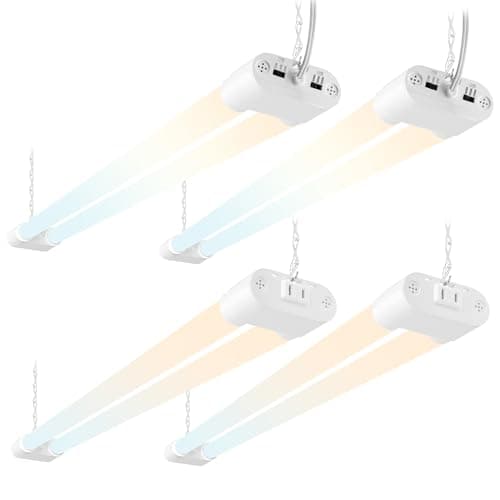
Light, because you cannot sort what you cannot see
hykolity 4 ft Shop Light, 5,500 lm, 3-CCT / 3-Level
The best-specified 4 ft shop light here: 130 lm/W, three color temperatures and three output levels from one fixture. No published CRI, like everything else in the category.
Running total: $942.39
Live Amazon prices for 7 of 7 items, checked October 5, 2026. Prices move, so treat this as today’s number, not a quote.
#ad · Buying through these links funds the site at no extra cost to you.
Keeping it
- Put things back in the right place, not the nearest one. A habit, not a system, and the only thing that actually maintains it.
- Label as you fill, never afterwards.
- Trace the pegboard tools, so gaps are visible.
- Re-sort once a year. What you use constantly changes, and the wall should reflect that.
- When the chest is full, look at the wall first. More drawers is rarely the answer.
Next
How to organize a tool chest goes drawer by drawer, and garage wall organization ideas covers what goes on which wall.
If the garage has general clutter as well as tools, how to organize a garage is the broader nine-step version.
Questions people actually ask
How do I organize a garage full of tools?
Sort by frequency first, not by type. Hourly tools go on a wall, weekly tools in the top drawers of a chest, occasional tools in the lower drawers grouped by family, and loose hardware in bins. Buying storage before sorting is how people end up with the wrong storage.
Should I buy a bigger tool chest?
Usually no. If the chest is full, the answer is almost always the wall rather than more drawers — because the tools you reach for hourly should never be in a drawer in the first place. Wall storage is also far cheaper per tool stored.
Where do cordless tools and batteries go?
On a powered wall rack, together. POKIPO's publishes 600 lb capacity, eight drill slots, side bit racks and an integrated 4-outlet strip — so the tool, its batteries and the charger live in one place with power. That is the specific problem no chest solves.
What do I do about loose screws and fittings?
Bins, standardized on one system with labels. Akro-Mils publishes 30 lb per bin and has dividers and label holders in its catalog, so the dozen you buy today still match the dozen you buy in three years. Loose hardware is the single biggest time-waster in a garage.
How do I keep it organized?
Put things back in the right place rather than the nearest one — which is a habit, not a system. Trace tools on a pegboard so an empty outline shows what is missing, label everything as you fill it, and re-sort once a year as what you use changes.
Sources
- Akro-Mils 30230 listing — Published 30 lb per bin, louvered-panel compatibility, optional dividers and label holders — the only bin system with a catalog behind it.
- WEN GG532B listing — Published nine lockable 100 lb soft-close drawers on 21-gauge steel — the drawer rating that makes heavy tool storage trustworthy.
- POKIPO power tool rack listing — Published 600 lb capacity, 4-outlet strip with 6.5 ft cord, 8 drill slots, side drill-bit racks.
Read next
- Garage Makeover on a BudgetThe cheap and free moves ranked by impact — paint, light, getting things off the floor — against the expensive ones that change less.
- Garage Setup Under $1,000The full working-garage build: light, wall storage, an overhead rack, a 48-inch bench and a chest publishing 100 lb per drawer.
- How to Organize a Tool ChestDrawer-by-drawer loading by weight and frequency, the liner and labeling decisions, and what should not be in the chest at all.
- The Best Tool Chests for a GarageTen chests compared on published per-drawer ratings and steel gauge, plus the depth figure almost nobody checks.
- The Best Pegboard for a GarageMetal pegboard panels and kits compared on the standoff flange, hole-size compatibility and whether accessories are included.
- Will Pegboard Hooks Work on Slatwall?Why pegboard hooks do not fit slatwall, what bridges them, and the 1/8-versus-1/4-inch hole trap that catches people within pegboard.
- The Best Garage Storage BinsBins and totes compared on published per-bin ratings, lid provision and whether the range is a system you can keep adding to.
- How to Organize a GarageA nine-step sequence for organizing a garage, each step with a price band, built around getting things onto walls and ceilings before buying any cabinets.