Category
Tool Storage
The best-documented category on the site. Two published numbers — pounds per drawer and steel gauge — separate a chest worth owning from one that sags.
Heads up: buy through a link here and we earn a commission from Amazon, at no extra cost to you. It never changes which product we rank first — how that works.
Ranked picks
What to buy, and what it costs today
Every tile below shows its top pick with a live Amazon price, so you can act from this page without digging through a review first.
Best tool chest
The Best Tool Chests for a Garage
Ten chests compared on published per-drawer ratings and steel gauge, plus the depth figure almost nobody checks.
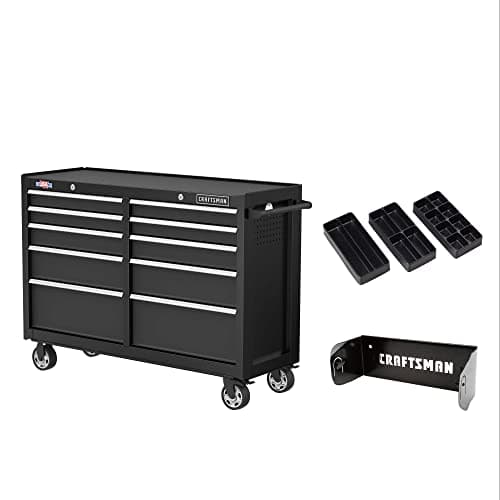
Top pick: CRAFTSMAN S2000 52" 10-Drawer Rolling Cabinet (CMST352102BK)
Best rolling box
The Best Rolling Tool Boxes
Modular stacking systems and rolling boxes compared on wheel size, access method, weather rating and ecosystem.
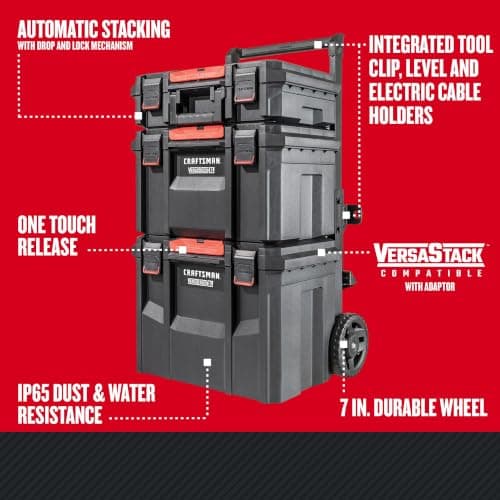
Top pick: CRAFTSMAN VERSASTACK XL Rolling Tower, 4 Piece (CMST60420)
Best combo
The Best Tool Chest Combos
Chest-and-cabinet combos compared on published drawer ratings, whether the top box detaches, and how many compartments lock separately.
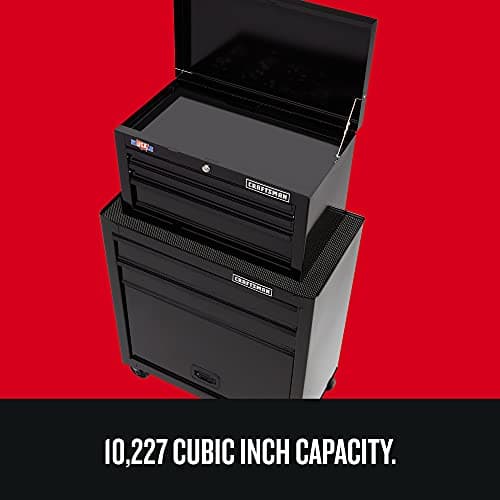
Top pick: CRAFTSMAN 26" Chest and Cabinet Combo, 5 Drawer (CMST82763BK)
Best budget chest
The Best Budget Tool Chests
Budget chests compared on the specs they publish, with empty weight used as a proxy for the steel thickness nobody states.
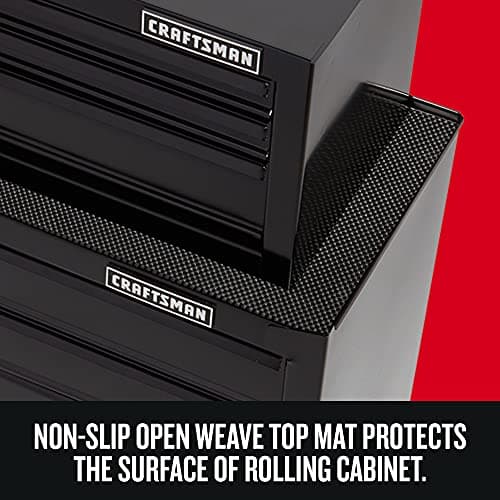
Top pick: CRAFTSMAN 26" Chest and Cabinet Combo, 5 Drawer (CMST82763BK)
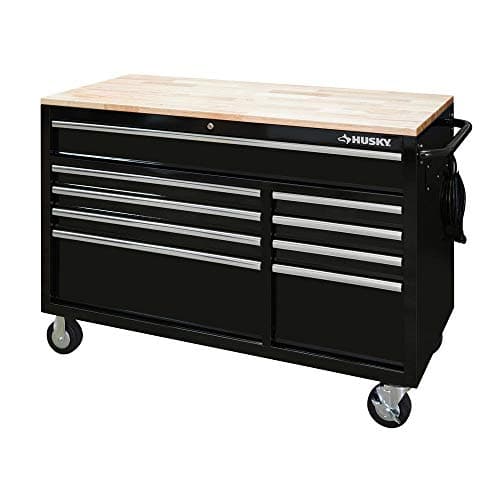
Best wood-top chest
The Best Tool Chests With Wood Tops
Wood-top chests compared on top thickness and published capacity, drawer ratings and whether they genuinely replace a bench.
Top pick: Husky 52" x 24.5" 9-Drawer Mobile Workbench
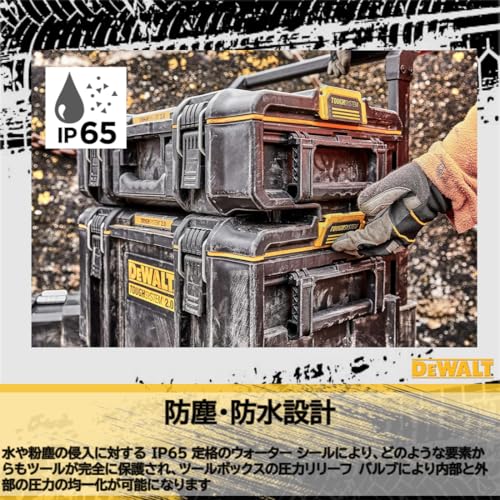
Best modular system
The Best Modular Tool Box Systems
Milwaukee PACKOUT, DEWALT ToughSystem 2.0, ToughBuilt StackTech, Craftsman VERSASTACK and Keter Stack N Roll compared on the specs each one actually publishes.
Top pick: DEWALT ToughSystem 2.0 DS400 Large Tool Box
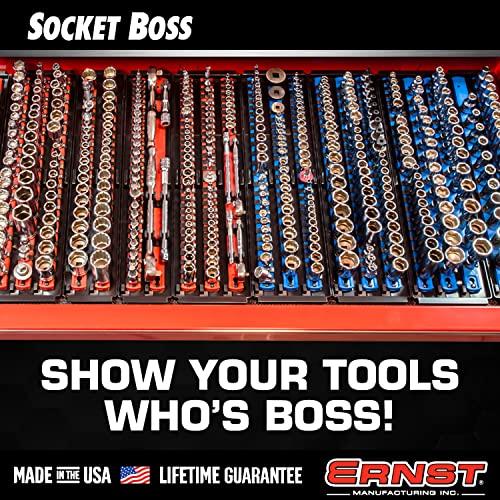
Best socket organizer
The Best Socket Organizers
Clip rails, magnetic trays and twist-lock organizers compared on retention, published socket counts and drive coverage, with the budget pick that publishes more than the premium ones.
Top pick: Ernst Manufacturing Socket Boss 18 in. 3-Rail Multi-Drive Organizer (8450-A)
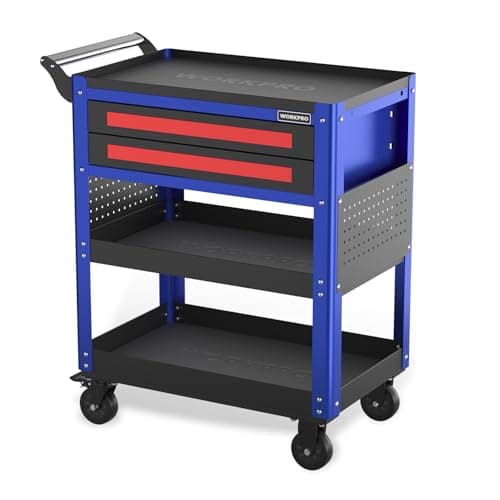
Best tool cart
The Best Tool Carts for a Garage
Rolling tool carts and service carts compared on published total capacity, per-shelf and per-drawer ratings, caster diameter and deck size - plus which ones publish nothing at all.
Top pick: WORKPRO Premium 28" 2-Drawer Rolling Tool Cart
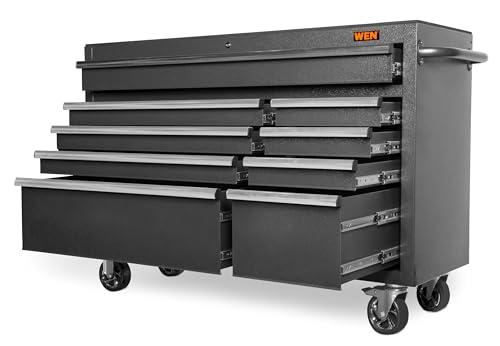
Best under $1,000
The Best Tool Chests Under $1,000
Ten tool chests that were under $1,000 at the last price check, ranked on published per-drawer slide ratings, steel gauge, depth and empty weight.
Top pick: WEN 52" Premium Rolling Cabinet (GG532B)
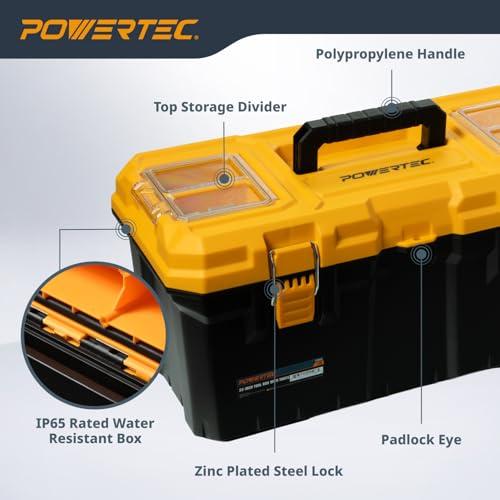
Best tool box under $100
The Best Tool Boxes Under $100
Nine hand-carry tool boxes under $100 across three shapes - flat steel, cantilever and modular - ranked on what each maker actually publishes: steel thickness, load rating, ingress rating and dimensions.
Top pick: POWERTEC 72363 22 in. Tool Box with Trays, IP65
The only category here with good specifications
After five categories of relative claims and missing load ratings, tool storage is a relief. The established brands publish the two numbers that matter — pounds per drawer and steel gauge — and those two numbers sort the field almost perfectly.
| Product | Per drawer | Steel gauge |
|---|---|---|
| CRAFTSMAN S2000 52 in. | 100 lb, full-extension soft-close | 18-20 ga (thickest here) |
| CRAFTSMAN 41 in. | 100 lb, full-extension soft-close | 18-20 ga |
| WEN 52 in. GG532B | 100 lb, soft-close | 21 ga |
| AIRAJ 42 in. 8-drawer | Not published (550 lb chest total) | Not published |
| Husky 52 in. mobile workbench | 100 lb, double slides on top and bottom | 21 ga, 1,200 lb frame |
| JOYBASE wood-top cart | 100 lb ball-bearing | Not published |
| CRAFTSMAN 26 in. combo | 30 lb, full-extension | 20-24 ga |
| Everything else here | Not published | Not published |
That last row covers most of the budget tier: Sormols, Oakcloud, INTERGREAT, Maxority, Goplus, ExploreHorizon and WORKPRO publish no per-drawer rating at all. That does not make them bad — Sormols gives you thirteen drawers for the price of a brand-name five-drawer combo, and AIRAJ at least publishes a chest total — but it means you are mostly buying on photographs rather than on engineering.
What you are actually paying for
Three things, in descending order of how much they matter day to day.
1. Slides
The slides are the chest. A drawer on 100 lb full-extension ball-bearing slides opens smoothly with a full socket set in it, for decades. A drawer on unrated slides gets progressively harder to open as you load it and eventually will not close. Full extension matters too: a three-quarter-extension drawer hides its back third from you permanently.
2. Frame rigidity
CRAFTSMAN's published 'steel I-frame' construction is doing real work. A loaded chest rolled over a threshold wants to rack — to deform into a parallelogram — and once it has, the drawers never run right again. This is also why empty weight is a useful proxy spec: 199 lb of steel at 52 in. is a different product from 73 lb of steel at 52 in., whatever the photographs look like.
3. Casters
Published caster size is rarer than it should be, and it decides whether the chest crosses a garage threshold or stops dead at it. CRAFTSMAN publishes 5 in. x 2 in. on its carts and 3 in. x 1 in. on the 26 in. combo — that is a meaningful difference. WORKPRO's 72 in. cabinet uses SIX casters rather than four, which is how 300 lb of empty chest still rolls. And check how many brake: two of four is common, all four is better.
How many drawers, and what size
More drawers is not better. More drawers in the same width means narrower drawers, and narrow drawers will not take a long socket rail, a pry bar or a cordless tool with the battery on.
- Mostly hand tools and sockets? Many shallow drawers. Ten drawers in 41-52 in. is right.
- Mostly cordless power tools? Fewer, deeper drawers. WORKPRO's 5-drawer 52 in. chest is laid out for exactly this.
- A mix? Look for a published drawer mix rather than a count. Sormols states 7 large and 6 small; Oakcloud mixes deep and shallow deliberately; INTERGREAT publishes three depths.
- Long awkward things? A deep open well, which S.Walt's lift-up wooden top has and almost nothing else does.
Depth is the spec nobody checks
Almost every chest here is 18 in. deep. Husky's mobile workbenches are 24.5 in., and Husky does the arithmetic for you: that is 36% more drawer volume. If you have ever tried to fit a long extension bar or a cordless circular saw into an 18 in. drawer, you know why that matters.
The costs of depth are real: more floor space, and reaching further into the drawer, which is harder on your back. But if the chest is going against a wall anyway, the extra six inches is free floor-plan-wise and transformative capacity-wise.
The wood-top question
A rolling chest with a solid wood top is two things at once: tool storage and a second work surface. In a garage where the main bench is always covered in a project, the second surface is worth more than it sounds.
Husky does the premium version — 1 in. solid wood with a polyurethane coating, rated at 200 lb, on a 1,200 lb frame. JOYBASE, Aokleo and S.Walt do the budget version: a solid wood top on a cheaper cabinet with fewer drawers. ExploreHorizon does the maximal version: six feet of rubberwood over fifteen lined drawers.
If you want the chest to replace a bench, that is the section to read: the best tool chests with wood tops. If you want the chest to sit beside a bench, skip the wood and spend it on slides instead.
Where to start
If you buy on documented specs, the entry point is WEN's 42 in. cabinet — 100 lb drawers and a published gauge at the lowest price that combination exists. The reference product is CRAFTSMAN's S2000, which publishes everything and is made in a named US factory. The capacity champion is Husky's 24.5 in. deep mobile workbench. All three, ranked with live prices, are on the best tool chests for a garage.
If budget is the constraint, the best budget tool chests is honest about what you give up — and CRAFTSMAN's 26 in. combo deserves credit for publishing a modest 30 lb figure rather than claiming nothing. For brand-level comparison, Husky vs CRAFTSMAN tool chests puts the two spec sheets side by side, and how to organize a tool chest covers what to do once it arrives.
The drawer that decides whether any of it stays organized is the socket drawer. The best socket organizers ranks clip rails, magnetic trays and twist-lock organizers by how the socket is actually held — and names the one measurement, peg height against drawer depth, that sends most of them back.
If the tools have to leave the garage, a steel chest is the wrong format and a modular stacking system is the right one. PACKOUT vs ToughSystem 2.0 puts Milwaukee's and DEWALT's published figures side by side — 100 lb against 123 lb per box, 250 lb against 440 lb on the rolling base — and says plainly which suits a garage slab and which suits a jobsite.
A chest holds the collection; a cart carries the twenty tools one job needs to the front of the car and back. The best tool carts ranks ten of them on the spec that actually decides whether a loaded cart crosses the expansion joint in your slab — caster diameter — which only three of the ten bother to publish.
A chest also needs to fit the garage you have. See the 2-car garage setup for where it goes, and garage setup under $1,000 for whether it belongs in your first thousand dollars at all.
If the budget is the starting point rather than the chest, the best tool chests under $1,000 is the price-filtered cut of this hub — and it makes the useful point that only four chests in the band publish both a per-drawer rating and a steel gauge, while two of the cheapest publish a figure anyway.
If you are deciding by name rather than by model, the best tool chest brands compares CRAFTSMAN, Husky, WEN, WORKPRO, Milwaukee and DEWALT on the specifications each one is actually willing to publish — and the ones each leaves out.
Head to head
The decisions that actually split this category
Brand head-to-head
Husky vs CRAFTSMAN Tool Chests
Husky and CRAFTSMAN compared on every published spec: drawer ratings, gauge, frame capacity, depth, casters and what is in the box.
Top pick: Husky 52" x 24.5" 9-Drawer Mobile Workbench
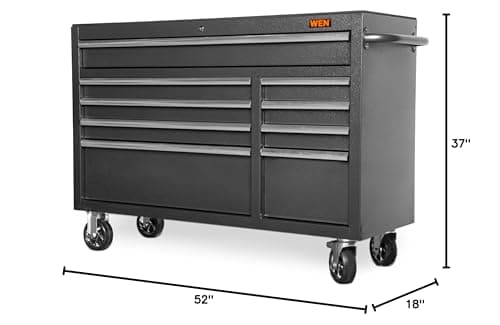
Chest vs cabinet
Tool Chest vs Tool Cabinet
The terminology, why the cabinet is the right first purchase, when to add a chest, and when a combo is the better buy.
Top pick: WEN 52" Premium Rolling Cabinet (GG532B)
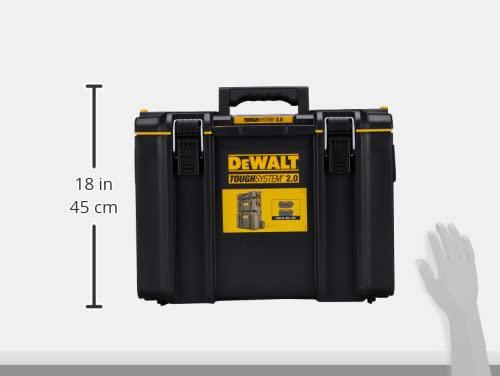
Modular system head-to-head
Milwaukee PACKOUT vs DEWALT ToughSystem 2.0
A decision table across published load capacity, stacking mechanism, IP rating, drawer hardware and entry cost — then which system a garage should actually buy.
Top pick: DEWALT ToughSystem 2.0 DS400 Large Tool Box
Brand head-to-head
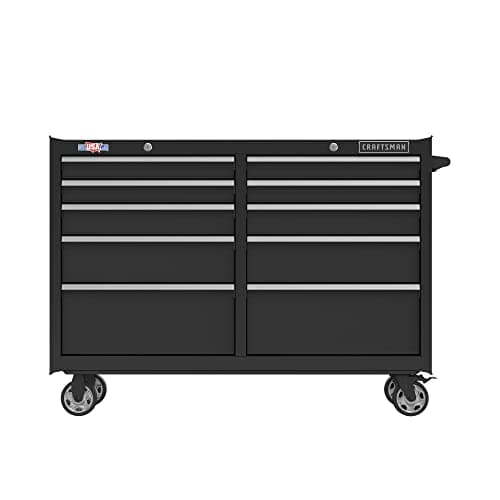
The Best Tool Chest Brands
Six tool storage brands compared on the specifications each one publishes and the ones it leaves out, with the flagship product from each as the reference point.
Top pick: CRAFTSMAN S2000 52" 10-Drawer Rolling Cabinet (CMST352102BK)
Guides
Questions worth answering before you spend
Guide
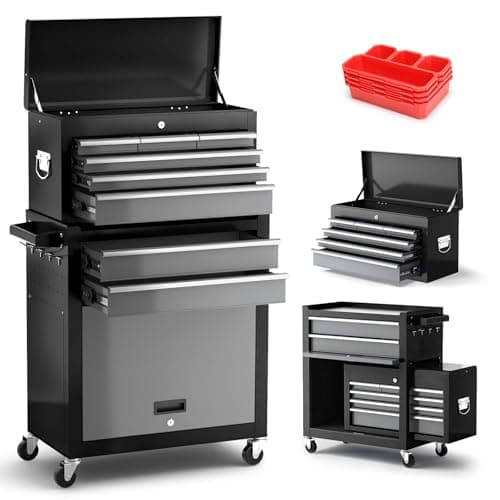
Tool Chest Buying Guide
The five decisions behind a tool chest purchase, in order, with the published spec to check at each one and the mistake people make.
Top pick: AIRAJ 42" 8-Drawer Rolling Tool Chest with Detachable Top Box
Guide
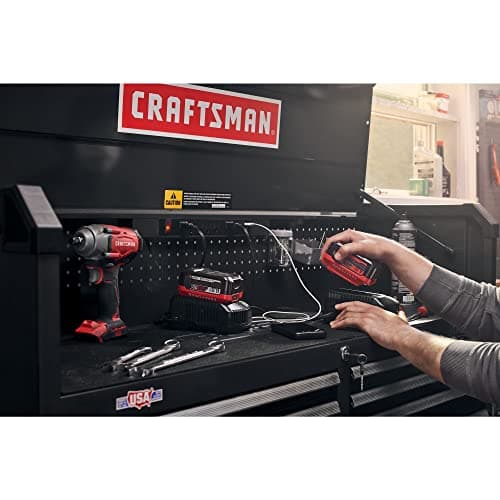
How to Organize a Tool Chest
Drawer-by-drawer loading by weight and frequency, the liner and labeling decisions, and what should not be in the chest at all.
Top pick: CRAFTSMAN S2000 52" 10-Drawer Rolling Cabinet (CMST352102BK)
Guide
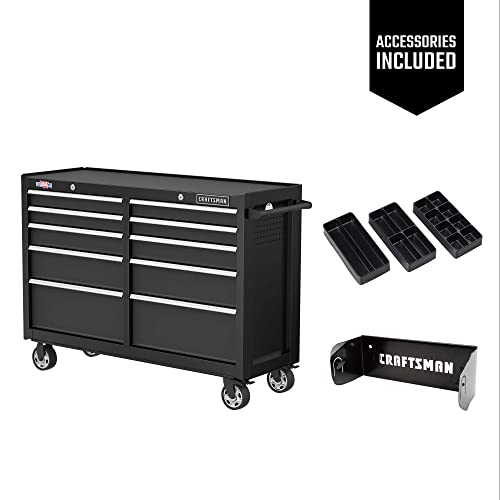
What Size Tool Chest Do I Need?
A size-by-tool-count table, the measurements to take before ordering, and the three chest widths that actually exist — 41, 52 and 72 inches.
Top pick: CRAFTSMAN S2000 52" 10-Drawer Rolling Cabinet (CMST352102BK)
Questions people actually ask
What drawer rating should I look for in a tool chest?
100 lb per drawer is the mark of a serious chest, and the established brands publish it: CRAFTSMAN's S2000 line, WEN's premium cabinets and Husky's mobile workbenches all state 100 lb full-extension ball-bearing slides. The budget tier publishes either a much lower figure — CRAFTSMAN's 26 in. combo honestly states 30 lb — or nothing at all. A full socket set in one drawer will exceed 30 lb comfortably.
Does steel gauge matter?
Yes, and lower numbers are thicker. CRAFTSMAN publishes 18-20 gauge on the S2000 line; WEN publishes 21 gauge; CRAFTSMAN's budget combo publishes 20-24 gauge. Thicker steel resists the racking that makes a loaded chest flex when you roll it over a threshold. Gauge is also the spec that explains why two chests of the same width weigh 199 lb and 60 lb.
Tool chest or tool cabinet?
A chest is the top box, a cabinet is the rolling bottom unit, and a combo is both. For a garage, start with the cabinet — it rolls, it holds more, and it gives you a work surface. Add the top chest later if you need the extra shallow drawers. Tool chest vs tool cabinet covers the choice properly.
How deep should a tool chest be?
Most are 18 in. deep. Husky's mobile workbenches are 24.5 in., and Husky quantifies the difference honestly: 36% more storage capacity than a traditional 18 in. unit. Depth is also what limits what fits — a long socket rail or a cordless tool with the battery attached needs the extra inches. The trade is reaching further into the drawer and more floor space used.
Is a wood-top chest worth paying for?
If it replaces a bench, yes. A 1 in. solid wood top on a rolling chest is a genuine second work surface you can clamp to, which turns one purchase into two pieces of equipment. Husky publishes a 200 lb top capacity on its extra-deep bench. The budget wood-top carts (JOYBASE, Aokleo, S.Walt) give you the surface for a fraction of the price with fewer drawers. See the best tool chests with wood tops.
What about modular stacking boxes?
Different product, different job. CRAFTSMAN VERSASTACK, Klein MODbox, DEWALT TSTAK and Keter Stack N Roll are about taking tools TO the work. If your tools stay in the garage, a rolling chest is better in every way. If half your work happens at someone else's house, a stacking system with 7 in. wheels is the right purchase.
Sources
- CRAFTSMAN S2000 52 in. chest listing — Source of the published 100 lb per-drawer slide rating and the 18-20 gauge steel I-frame specification.
- Husky 52 in. mobile workbench listing — Source of the published 1,200 lb frame capacity, 100 lb slides and 1 in. solid wood top specification.