Category
Garage Lighting
The cheapest upgrade in the garage, and the one people put off longest. Lumens per square foot, efficacy, and the color-rendering figure nobody publishes.
Heads up: buy through a link here and we earn a commission from Amazon, at no extra cost to you. It never changes which product we rank first — how that works.
Ranked picks
What to buy, and what it costs today
Every tile below shows its top pick with a live Amazon price, so you can act from this page without digging through a review first.
Best garage lighting
The Best Garage Lighting
Nine fixtures compared on published lumens, calculated efficacy, color temperature and link limits — with the CRI gap stated plainly.
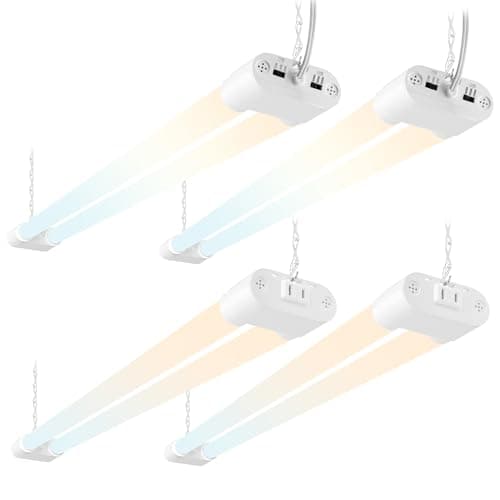
Top pick: hykolity 4 ft Shop Light, 5,500 lm, 3-CCT / 3-Level
Best shop light
The Best LED Shop Lights
Nine linkable LED shop lights in 4 ft and 8 ft, compared on published lumens, calculated efficacy, link limits and build.
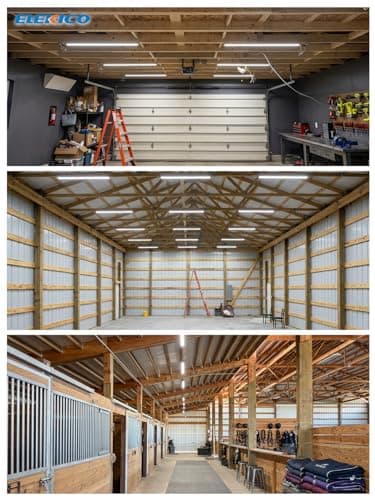
Top pick: ELEKICO 4 ft V-Shape Shop Light, 7,500 lm, 6-Pack
Best work light
The Best Garage Work Lights
Portable and rechargeable work lights compared on published lumens, IP rating, mounting options and — in one case — surface temperature.
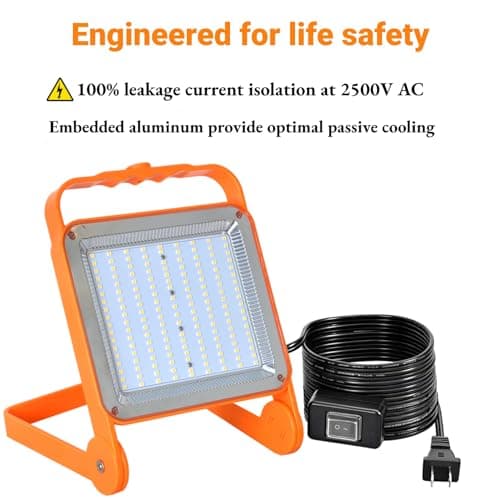
Top pick: SETEN 50W Work Light, 8,000 lm, 2-Pack
Best for detailing
The Best Lighting for Car Detailing
Why CRI is unavailable in this product category, what actually helps for detailing work, and the fixtures that get closest.
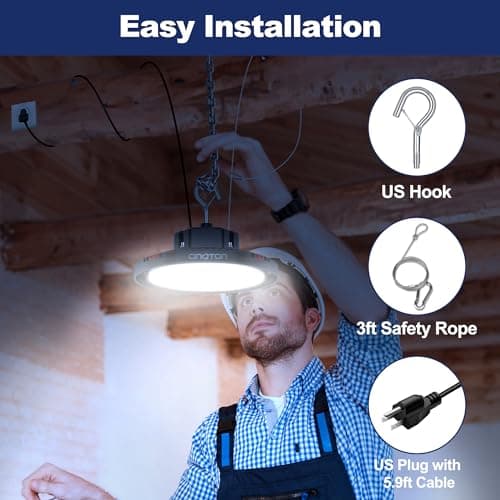
Top pick: CINOTON UFO High Bay, 160W, 24,000 lm
Lighting is the cheapest transformation in the garage
A set of LED shop lights costs less than a single cabinet and changes the garage more. A badly lit garage is one you avoid working in, so you store things there instead, and then it becomes a storage room with a car in it. Fixing the light is the fastest route out of that.
It is also the easiest category here to get right, because the specs are published and comparable. Lumens, watts and color temperature appear on essentially every listing, and efficacy — lumens per watt — falls straight out of the first two.
The three numbers that decide it
Total lumens, against your floor area
Work backwards from the room. At 50-75 lumens per square foot for a working garage, a 400 sq ft two-car bay needs roughly 20,000-30,000 lumens. That is four 4 ft fixtures at 5,500-7,500 lm, or two 8 ft fixtures at 15,000 lm, or three 150W high bays if the ceiling is high enough to want them.
People consistently under-buy here. A single 4,400 lm fixture in the middle of a two-car garage is roughly a tenth of what the room needs, and it is what most garages have.
Efficacy, in lumens per watt
This is the number that decides your running cost over the fixture's life, and in this category it ranges from about 105 to about 167 lm/W — a 60% spread for products that look identical on a shelf.
| Fixture | Published output | Efficacy |
|---|---|---|
| hykolity 4 ft, 3-CCT | 5,500 lm at 42W | 130 lm/W |
| hykolity 4 ft, 4,400 lm | 4,400 lm at 42W | 105 lm/W |
| ELEKICO 4 ft V-shape | 7,500 lm at 50W | 150 lm/W |
| ONLYLUX 4 ft | 10,000 lm at 60W | 167 lm/W (maker's figures) |
| Barrina 8 ft T8 | 10,000 lm at 72W | 138 lm/W minimum, published |
| SHOPLED 8 ft | 15,000 lm at 100W | 150 lm/W |
| HYPERLITE 150W high bay | 21,750 lm at 150W | 145 lm/W |
| Sylvania 100W high bay | 11,000 lm at 100W | 110 lm/W |
A figure near 167 lm/W would be class-leading for any LED fixture. Treat the highest numbers here as the maker's claim rather than a measurement — and note that Barrina publishing a MINIMUM efficacy is a meaningfully more conservative way to state the same spec.
Color temperature, and the CRI gap
5000K is the default and the right default. 4000K is warmer and more comfortable for long sessions; 6500K is cold and clinical. This is genuinely a preference, and hykolity's switchable 3-CCT fixture removes the need to guess.
What you cannot select on is color rendering. No fixture in this entire category publishes a CRI figure. Not one. For general garage work that does not matter much — you can see what you are doing. For paint matching, detailing or bodywork it matters a great deal, and the honest position is that this product set does not let you choose on it. We are not going to publish a CRI number we cannot source.
Three light types, three jobs
- Linear shop lights (4 ft and 8 ft). The correct choice for general garage lighting at normal ceiling heights, because they spread light along the space rather than concentrating it in a cone. Link several on one plug and they are also the cheapest lumens here.
- UFO high bays. A lot of light from one point, designed for 12 ft and higher. In a 9 ft garage one is both too bright directly beneath it and leaves the corners dark. Above 12 ft they are the right answer, and dimmability becomes worth paying for.
- Portable work lights. Not room lighting. These go where the work is — inside an engine bay, under a car, into a corner no fixture reaches. A rechargeable magnetic one is a different and complementary purchase from anything mounted. See the best garage work lights.
Linking, and the thing people get wrong
Linkable fixtures daisy-chain so one plug feeds several lights, which is what makes a garage install trivial — no wiring, no electrician, one outlet. The published link limits vary: 8 for Barrina T5, 6 for hykolity, 4 for BBOUNDER and Sunco, 3 for ELEKICO and SHOPLED.
The mistake is ignoring the total wattage on that one plug. Six 42W fixtures is 252W — comfortable. But four 100W 8-footers on one chain is 400W on one cord, and that is where you check the cord rating and consider splitting across circuits. The link limit exists for a reason; do not exceed it because the connector physically fits.
Task light beats room light for bench work
The light you need over a bench is not more room light — it is light coming from a different angle, close to the work, so your own hands and head stop casting shadows onto what you are doing.
Two good answers. A slim T5 strip (Barrina, 2,200 lm) mounted under a shelf directly above the bench, which links up to eight and costs almost nothing. Or a bench with an integrated magnetic LED strip — Eltean, Rumetol, HAK and CAMMOO all ship one, and the magnetic mount means you reposition it to kill the shadow rather than working around it. That is covered in garage workbenches.
Where to start
Measure the floor area, multiply by 60 lumens per square foot, and divide by the output of the fixture you like. That number is how many you buy. Then check the link limit and the total wattage.
The ranked picks with live prices are on the best garage lighting, with the 4 ft fixtures specifically on the best LED shop lights. If you are replacing fluorescent tubes, LED vs fluorescent shop lights covers whether to retrofit or replace the fixture. And because lighting is cheap, it is the first thing bought in garage setup under $500.
Head to head
The decisions that actually split this category
LED vs fluorescent
LED vs Fluorescent Shop Lights
Why LED has won on efficacy, cold starting and flicker — and the honest retrofit-versus-replace decision for existing fluorescent fixtures.
Top pick: hykolity 4 ft Shop Light, 5,500 lm, 3-CCT / 3-Level
4 ft vs 8 ft
4 ft vs 8 ft Shop Lights
The real trade between 4 ft and 8 ft fixtures — mounting points, cords, link limits, shipping risk — and which suits which garage.
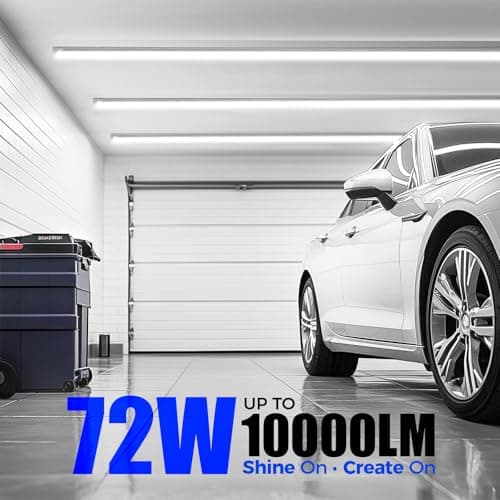
Top pick: Barrina T8 8 ft Shop Light, 10,000 lm, 72W, 10-Pack
Guides
Questions worth answering before you spend
Guide
Garage Lighting Layout Guide
Fixture count from floor area, placement rules by garage size, and why task lighting over the bench is a separate problem from room lighting.
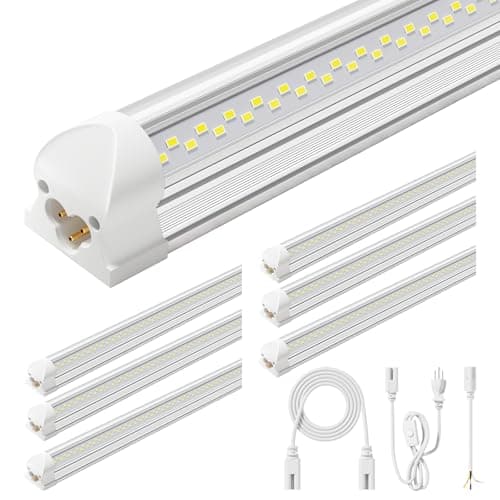
Top pick: ELEKICO 4 ft V-Shape Shop Light, 7,500 lm, 6-Pack
Guide
Lighting for High Garage Ceilings
Why high bays suit tall garages, when linear fixtures are still right, why dimming matters at height, and the mounting and maintenance issues.
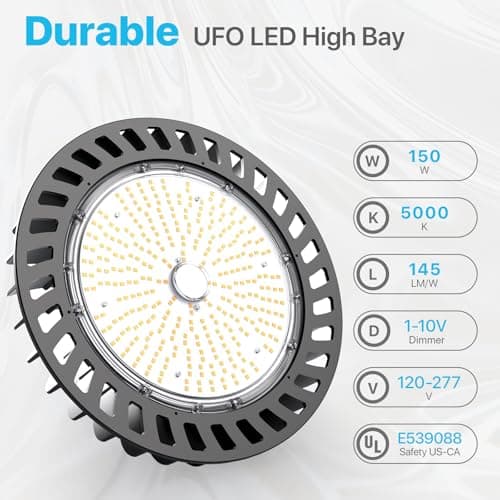
Top pick: HYPERLITE UFO High Bay, 150W, 21,750 lm, 1-10V Dimmable
Guide
Color Temperature and CRI in a Garage
What color temperature and CRI each describe, which garages suit which Kelvin value, and why the CRI figure is absent from this entire category.
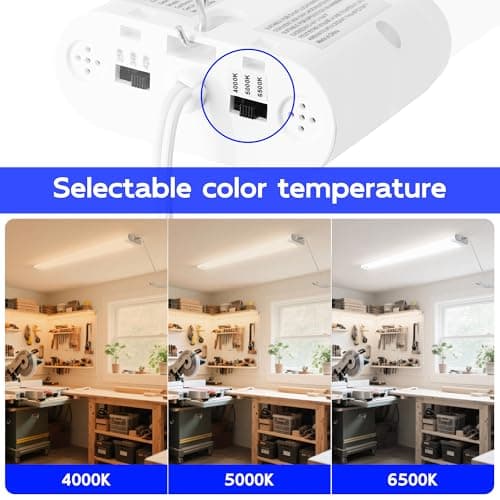
Top pick: hykolity 4 ft Shop Light, 5,500 lm, 3-CCT / 3-Level
Questions people actually ask
How many lumens do I need in a garage?
A workable rule for a working garage is 50-75 lumens per square foot, which puts a 400 sq ft two-car garage at roughly 20,000-30,000 lumens total. Four 4 ft fixtures at 5,000-7,500 lm each gets you there; two 8 ft fixtures at 15,000 lm each also does. For bench work specifically, add task lighting on top of that rather than trying to brighten the whole room. The layout math is on the garage lighting layout guide.
What color temperature is best for a garage?
5000K. It reads as clean, neutral daylight and it is what almost every fixture in this category is tuned to. 4000K is warmer and easier to spend hours under; 6500K is noticeably blue and many people find it clinical in a space they work in for a whole afternoon. hykolity's 3-CCT fixture lets you pick between 4000K, 5000K and 6500K from one product, which is the easy answer if you are unsure. More on color temperature and CRI.
What CRI do these fixtures have?
None of them publish one. Not one fixture in this category states a color rendering index, which is a real finding rather than an omission on our part. If you are doing color-critical work — paint matching, detailing, bodywork — that matters, and the honest answer is that you cannot select on CRI within this product set. We will not invent a figure to fill the gap. The best lighting for car detailing addresses what to do about it.
4 ft or 8 ft shop lights?
Eight-foot fixtures halve your mounting points and your cords for the same light — that is the whole argument and it is a good one. The counter-argument is that an 8 ft fixture is awkward to carry, awkward to mount alone, and more likely to arrive damaged. For a garage you are lighting in one go with help, go 8 ft. For a garage you are lighting one fixture at a time, go 4 ft. See 4 ft vs 8 ft shop lights.
How many lights can I link together?
It varies and it is published, which makes it comparable. Barrina's T5 strips link up to 8; hykolity's 4 ft fixtures link up to 6; BBOUNDER and Sunco link 4; ELEKICO links 3; SHOPLED explicitly says no more than 3 at once. Multiply fixtures by watts to check the total on one plug — six 42W fixtures is 252W, which is fine, but ten 100W 8-footers on one circuit is not.
Do I need high bay lights?
Only if the ceiling is high. A UFO high bay concentrates a lot of light into a cone, which is right for a 12-14 ft ceiling and overwhelming at 9 ft. In a standard garage, linear shop lights spread light more evenly for less money. If your ceiling is high, lighting for high garage ceilings covers the choice, and dimmability stops matters becoming blinding.
Sources
- hykolity 3-CCT shop light listing — Source of the 5,500 lm / 42W / 130 lm/W figures and the 4000K-5000K-6500K selectable color temperatures.
- Barrina 8 ft T8 shop light listing — Source of the published minimum 138 lm/W efficacy and the 4-fixture link limit.