Category
Garage Wall Organization
Slatwall, pegboard, rails, hooks and cleats. The category where almost nobody publishes a load rating — so here is who does, and what to do about the rest.
Heads up: buy through a link here and we earn a commission from Amazon, at no extra cost to you. It never changes which product we rank first — how that works.
Ranked picks
What to buy, and what it costs today
Every tile below shows its top pick with a live Amazon price, so you can act from this page without digging through a review first.
Best wall system
The Best Garage Wall Organization Systems
The whole category ranked together — slatwall, pegboard, rails and powered tool racks — with which wall each belongs on and what it publishes.
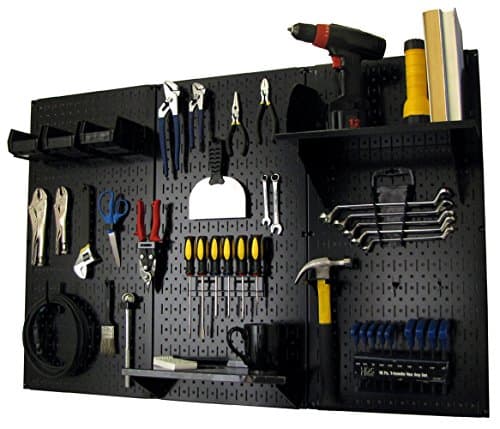
Top pick: Wall Control 4 ft Metal Pegboard Tool Storage Kit
Best pegboard
The Best Pegboard for a Garage
Metal pegboard panels and kits compared on the standoff flange, hole-size compatibility and whether accessories are included.
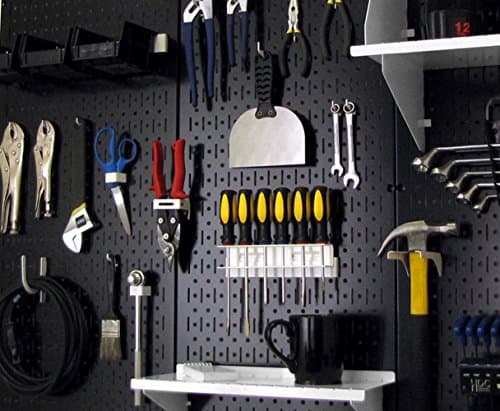
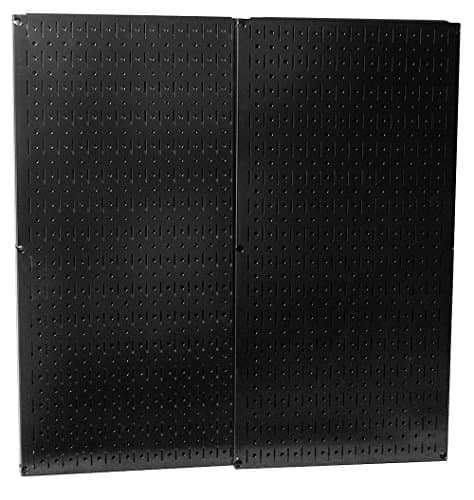
Top pick: Wall Control Metal Pegboard Pack, 2 x (32 x 16 in.) (30-P-3232B)
Best slatwall
The Best Slatwall Panels
Five slatwall panels compared on published load per square foot, groove spacing, trim provision and cuttability.
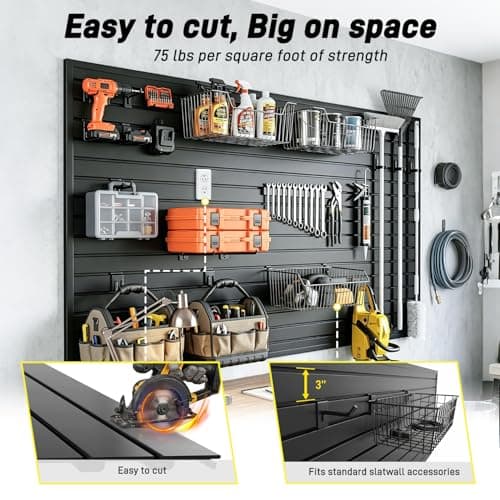
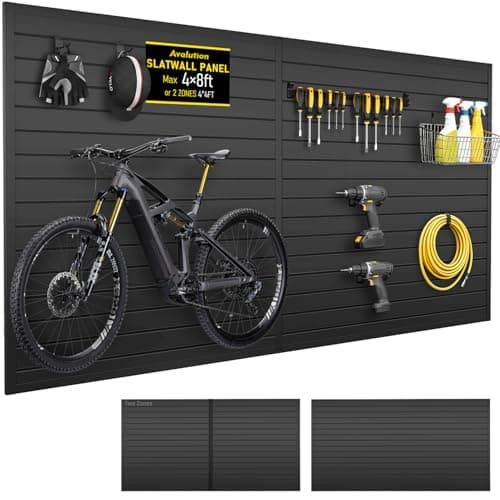
Top pick: Avalution PVC Slatwall Panels, 4 x 8 ft
Best hooks
The Best Garage Wall Hooks
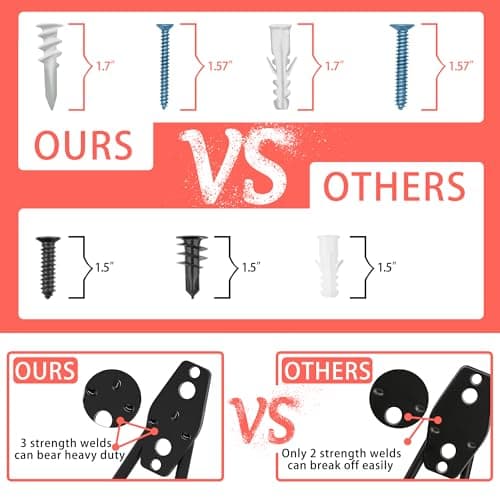
Hook sets and heavy braced hooks compared on size range, coating, bracing and which wall fasteners are supplied — with the ratings gap stated plainly.
Top pick: Kodreat Garage Hooks, 18-Pack, 6 Sizes
The wall is the most under-used surface in the garage
A two-car garage has roughly 400 square feet of floor and roughly 600 square feet of wall. Most garages use almost none of the wall, which is why the floor is full. Wall storage is also the only storage that keeps things at the height you actually use them — overhead racks are for things you touch twice a year, and cabinets hide things you then forget you own.
This category is where a garage goes from storing things to being usable. It is also the category with the worst specifications on the entire site, so it needs the most care.
The specification problem, stated plainly
Of the slatwall panels, pegboards, rails and hooks covered here, a small minority publish a load rating in a unit you can use. The rest publish comparisons: three times stronger than an unnamed competitor, thirty times more durable than drywall. Drywall is not a load-bearing material, so the second claim is not a specification — it is a sentence.
The ones that do publish something real:
- Avalution slatwall — 75 lb per square foot, plus 3 in. groove spacing so third-party accessories fit.
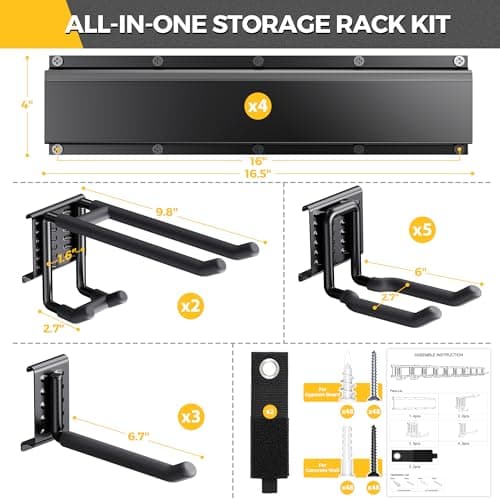
- LBT 66-inch rail — 720 lb rail total, and a 9 mm hook diameter, which is the spec that tells you whether a hook bends.
- UUP 48-inch rail — 440 lb, with the exact hook mix published by shape and size.
- TIDYME 48-inch rail — 300 lb, on hardware very similar to the 440 lb rails. A lower claim on comparable hardware reads as a more careful one.
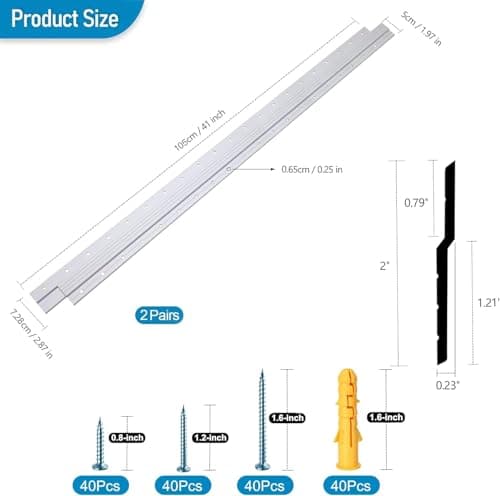
- AENTGIU 41-inch French cleat — 500 lb for the pair.
- POKIPO power-tool rack — 600 lb, with an integrated 4-outlet strip.
Where no number exists, the honest planning assumption is that the fastening is the limit, not the product. A panel rated for anything at all is irrelevant if it is screwed to drywall; a panel rated for nothing is fine if it is lagged into studs and you are hanging a rake.
Four systems, four jobs
Slatwall: for the heavy and awkward
Horizontal grooves at 3-inch spacing, taking hooks, brackets, baskets and shelves. The strongest option per square foot and the most expensive. Its real advantage is that the accessory can be a shelf or a bike hook or a basket — a pegboard mostly takes hooks. Buy it for the wall where the bikes, ladders and extension cords live.
Metal pegboard: for hand tools
Steel panels with 1/4 in. holes, a vast accessory ecosystem, and far cheaper per square foot than slatwall. The right wall for the tools you reach for every time you are in the garage — above the bench, at chest height. Hardboard pegboard is a false economy; the holes fray and the hooks start falling out within a year.
Rail and hook systems: for long-handled tools
A horizontal rail with hooks that slide along it. Nothing else handles rakes, shovels, brooms and strimmers as cleanly, and nothing else lets you rearrange without new holes. Rails are also the cheapest real wall system here. The limitation is that a rail holds only what hangs — no shelves, no bins, no enclosure.
French cleats: for things, not tools
Not a tool-storage system — a mounting system. Use a cleat to hang a cabinet, a shop-made tool board or a shelf so that it comes off the wall in two seconds and goes back level. In a garage you will rearrange at least twice, that is worth more than it costs.
What to put where
| Wall | What goes there | System |
|---|---|---|
| Above the bench | Screwdrivers, pliers, measuring tools, the stuff you reach for constantly | Metal pegboard, chest height, with a good accessory kit |
| Beside the door | Rakes, brooms, shovels, the leaf blower | A rail system, hooks sliding to fit what you own |
| The long wall | Bikes, ladders, hoses, extension cords, folding chairs | Slatwall, or heavy braced hooks |
| Above the chest | Power tools, batteries, chargers | A powered tool rack, or a cabinet on a French cleat |
The common error is treating the wall as one surface and buying one system for all of it. Four walls doing four jobs want three or four different systems, and because rails and pegboard are cheap, that costs less than covering everything in slatwall.
Hooks deserve more thought than they get
Hooks are where this category's spec problem bites hardest, because a hook is the single most heavily loaded thing on your wall and essentially none of them publish a per-hook rating. What you can judge instead:
- Reach versus bracing. A 14-inch hook without a support rod levers out of the wall under load. FancyEagle's 14 in. hooks are the only ones here braced with support rods, and on a tire or a coiled hose that is the difference between holding and pulling out.
- Coating. PVC rubber over steel grips the item and protects its finish — relevant for an aluminum ladder or a painted bike frame.
- Fastener provision. The better kits supply fasteners for drywall, wood, brick and concrete. The cheap ones supply plastic plugs and nothing else.
A mixed box of six sizes and three shapes is the sensible first purchase; buy one braced, heavy, specific hook for each genuinely heavy item afterwards. The best garage wall hooks ranks them, and garage wall organization ideas covers layout.
Where to start
One pegboard panel above the bench and one rail by the door will change how the garage feels more than anything else you can buy for the money. Add slatwall later, on the one wall that carries the heavy awkward items. The ranked picks are on the best garage wall organization systems, and if you are fitting pegboard yourself, how to install pegboard in a garage covers the mounting.
Wall storage also pairs directly with the bench: see garage workbenches for what goes in front of the wall, and garage setup under $500, where wall storage is deliberately the first thing bought.
Head to head
The decisions that actually split this category
Wall system head-to-head
Slatwall vs Pegboard
A decision table across load rating, cost, install difficulty and reconfigurability, then which wall each system belongs on.
Top pick: Avalution PVC Slatwall Panels, 4 x 8 ft
Cleat vs slatwall
French Cleat vs Slatwall
What a French cleat actually does, how it differs from slatwall, and why it is the right way to hang a cabinet or a shop-made tool board.
Top pick: AENTGIU 41" Aluminum French Cleat, 500 lb, 2 Pairs
Guides
Questions worth answering before you spend
Guide
How to Install Pegboard in a Garage
How to mount pegboard so hooks actually seat: standoff, finding studs, masonry fasteners, the right height, and layout before you drill.
Top pick: Wall Control Metal Pegboard Pack, 2 x (32 x 16 in.) (30-P-3232B)
Guide
Garage Wall Organization Ideas
A wall-by-wall layout plan — what belongs at which height, which system suits each wall, and the three ideas that waste a wall.
Top pick: LBT 66" Tool Rail, 720 lb
Quick answer
Will Pegboard Hooks Work on Slatwall?
Why pegboard hooks do not fit slatwall, what bridges them, and the 1/8-versus-1/4-inch hole trap that catches people within pegboard.
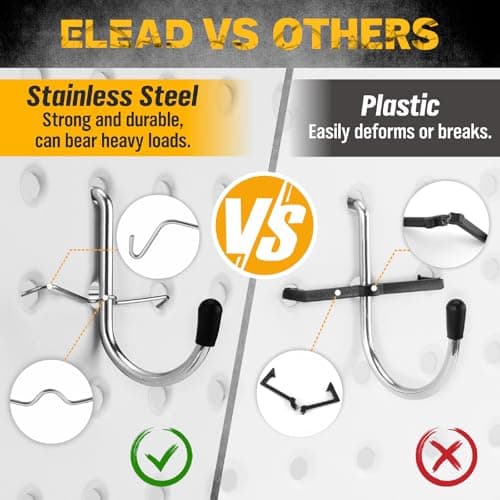
Top pick: ELEAD 297-Piece Pegboard Hook Kit
Questions people actually ask
Slatwall or pegboard?
Slatwall holds more weight per square foot and takes brackets and shelves as well as hooks; pegboard is cheaper, takes a far larger accessory ecosystem, and is easier to install in awkward sections. The deciding question is what you are hanging: bikes, ladders and power tools want slatwall; hand tools and small hardware want pegboard. The full breakdown is on slatwall vs pegboard.
How much weight can slatwall hold?
Only one product in this group publishes a figure: Avalution states 75 lb per square foot. Everyone else offers relative claims — '3 times the load capacity' of an unnamed panel, '30 times more durable than drywall'. Drywall is not a load-bearing surface, so that second comparison tells you nothing. Where no rating exists, assume the fastening into the studs is your limit and hang accordingly.
Is metal pegboard worth the extra over hardboard?
Yes, and the reason is the holes. Hardboard pegboard holes fray and widen within a year of real use, and then hooks fall out under load. Steel holes do not. Wall Control also builds in a pre-formed 3/4 in. flange that holds the panel off the wall so hooks seat properly — which is why tools on a Wall Control board still hang straight years later. See the best pegboard for a garage.
Can I use my existing pegboard hooks on a new board?
Check the hole size and spacing first. Most garage pegboard is 1/4 in. holes at 1 in. spacing; smaller 1/8 in. boards exist and the hooks are not interchangeable without peg locks. The good accessory kits (INCLY, ELEAD) include peg locks precisely so 1/8 in. hooks work in a 1/4 in. board. Details on pegboard hooks and accessories.
What is a French cleat and do I need one?
A French cleat is a pair of interlocking angled rails: one on the wall, one on the thing you are hanging. It lets a cabinet, tool board or shelf lift off in seconds and go back exactly level. If you expect your garage layout to change — and it will — a cleat is the difference between rearranging in an afternoon and drilling a new set of holes. French cleat vs slatwall covers when each makes sense.
Can I mount wall storage on drywall without hitting studs?
For a hook holding a broom, yes. For anything with real weight — a bike, a ladder, a loaded shelf — no. Every heavy product in this category assumes a stud or a masonry anchor, and the ones that mention drywall mounting do not pair it with a weight limit, which is exactly the information you would need. Find your studs.
Sources
- Avalution slatwall product listing — Source of the 75 lb per square foot rating and the 3 in. groove spacing — the only published load figure for slatwall in this group.
- Wall Control metal pegboard product listing — Source of the pre-formed 3/4 in. flange specification and the dual slotted / 1-4 in. peg compatibility.