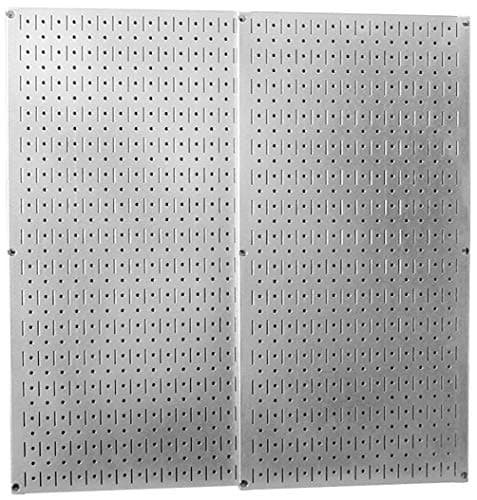
Both go on a wall and hold tools, and they are not substitutes. The deciding question is what you are hanging — and the answer for most garages is both.
Heads up: buy through a link here and we earn a commission from Amazon, at no extra cost to you. It never changes which product we rank first — how that works.
The short answer
Slatwall
Metal pegboard
Published load rating
75 lb/sq ft (Avalution)
None published
Cost per square foot
High
Low
Accessories
Hooks, brackets, shelves, baskets
Mostly hooks — but a vast ecosystem
Install, small area
Awkward — panels are 1 x 4 ft strips
Easy — 16 x 32 in. panels
Install, whole wall
Easier — interlocking self-aligns
Many panels, many leveling jobs
Reconfigurable
Yes, anywhere along a groove
Yes, any hole
Cold-weather durability
PVC goes brittle in real cold
Steel does not care
Best for
Bikes, ladders, hoses, shelves
Hand tools at chest height
Scroll the table sideways on a narrow screen.
They are not substitutes
The question gets asked as though one of these is better, and the honest answer is that they do different jobs well enough that most garages should have both. What they share is being a wall surface you can hang things on; almost everything else differs.
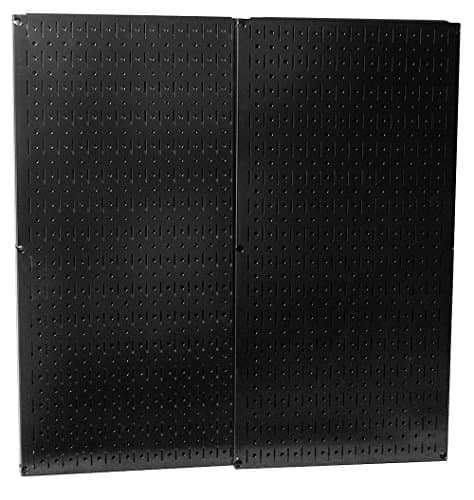
Pegboard is a tool wall. Dense, cheap, infinitely reconfigurable, and designed around hooks holding hand tools. Its natural home is directly above a workbench at chest height.
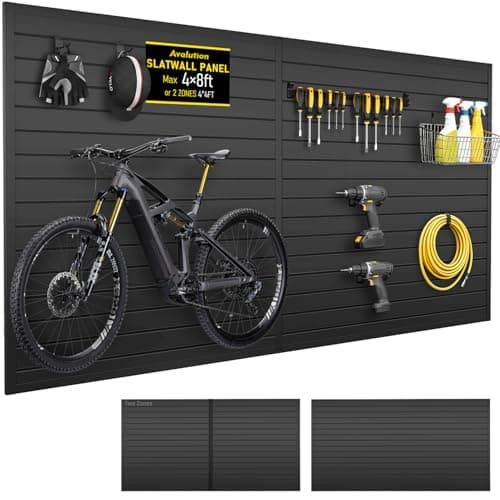
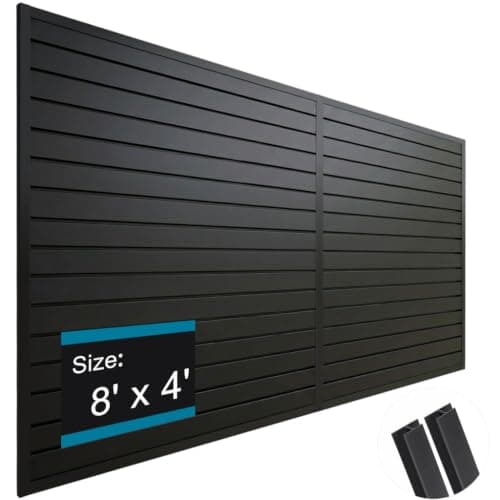
Slatwall is a storage wall. Stronger per square foot, and its grooves take brackets, shelves and baskets as well as hooks. Its natural home is the long wall where the bikes, ladders and hoses go.
The load question, properly
Avalution publishes 75 lb per square foot for slatwall. No pegboard in this category publishes any load figure at all, which makes a direct comparison impossible — so here is the honest version.
Metal pegboard's practical limit is set by the hook, not the panel. A 1/4-inch hook in a steel hole, with a proper 3/4-inch standoff so the rear leg seats, holds a surprising amount — more than enough for any hand tool. What pegboard does not do is take a shelf bracket or a bike hook rated for a loaded bicycle, because the load path is a single small hole.
Slatwall's groove runs the full width of the panel, so a bracket bears across inches rather than at one point. That is the structural reason it handles heavy and awkward items, and why 75 lb per square foot is a meaningful figure for it and would not be for pegboard.
Cost, honestly
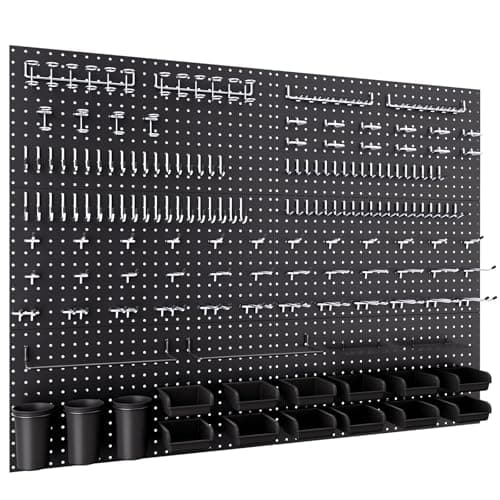
Pegboard wins and it is not close. A 12-square-foot metal pegboard kit with 234 accessories costs about what a single slatwall panel pack does. Even Wall Control's premium panels — the most expensive pegboard here — work out cheaper per square foot than slatwall.
So the cost-efficient layout is obvious: pegboard everywhere it works, slatwall only where its strengths are needed. Covering a whole garage in slatwall is a styling decision, not a storage one.
Installation differs by area
This flips depending on how much wall you are covering, which is counter-intuitive.
For a small area, pegboard is easier. A 32 x 16 in. panel is one level, four screws, done. Wall Control states its panels mount into studs or sheet rock with no framework required.
For a whole wall, slatwall is easier. The panels interlock, so each one self-aligns to the last — you level the first panel obsessively and the rest follow. Pegboard covering the same wall means eight separate panels each needing its own leveling and its own fixings.
Practical consequence: if you are doing a 4 x 8 ft section, slatwall's install advantage partly offsets its cost. If you are doing a 3-foot strip above a bench, pegboard wins on both.
The accessory ecosystems
Pegboard's accessory ecosystem is enormous and cheap: 234-piece and 297-piece kits exist with 16 hook types and twenty bins, for the price of a few slatwall hooks. Bins matter especially, because loose small hardware is the real chaos in a garage and bins are what fix it. See pegboard hooks and accessories.
Slatwall's ecosystem is smaller, more expensive and more capable — brackets, shelves, baskets, bike hooks, specialized holders. The catch is compatibility: only Avalution publishes a groove spacing (3 inches, the industry standard), so with any other panel you are buying that brand's accessories or measuring and hoping.
Cold weather is a real differentiator
Every slatwall panel here is PVC. PVC loses impact resistance as temperature drops, so in a detached unheated garage in a northern winter a panel that has been through several seasons is more brittle than the one you installed.
Steel pegboard does not have this problem at all, and galvanized steel pegboard — Wall Control's cheaper option — is specifically the right pick for a cold, damp garage. That is one scenario where the usual reasoning inverts and pegboard is the better choice even for heavier items.
The recommendation
Pegboard above the bench, metal not hardboard, with a standoff flange. This is the purchase that changes your daily experience of the garage.
A rail by the door for long-handled tools, which is cheaper than either system and better at that specific job. See the best garage wall hooks.
Slatwall on one wall — the one with the bikes, the ladder and the hoses — if the budget reaches it.
Never slatwall everywhere. It is several times the cost for an advantage you only need on one wall.
Mounts to wood studs or concrete; panels can be cut to fit
How it scores
Load rating
9.0
Spec transparency
9.5
Accessory fit
9.0
Install
7.5
Value
8.5
Where it wins
+The only slatwall in this group that publishes pounds per square foot — which is the only way to know whether the wall will hold what you plan to hang
+Standard 3 in. groove spacing means you are not locked into one brand's hooks forever
+Panels cut to size, so an awkward wall does not force a compromise
+UV resistance matters if the garage door stays open all summer
Where it doesn’t
−75 lb per square foot assumes the panel is fastened into studs; on bare drywall the drywall is the limit, not the panel
−PVC goes brittle in genuine cold — a detached, unheated garage in the north is hard on it
Pegboard above the bench for hand tools, slatwall on the one wall carrying bikes, ladders and hoses. Slatwall holds more per square foot and takes brackets and shelves; pegboard is far cheaper, has a bigger accessory ecosystem and is easier to fit in awkward sections.
Which holds more weight?+
Slatwall, where it is published. Avalution states 75 lb per square foot. No pegboard here publishes a figure, but metal pegboard's practical limit is lower — it is designed around hooks rather than brackets. For bikes and ladders, slatwall; for hand tools, the difference never comes up.
Which is cheaper?+
Pegboard, by a wide margin per square foot — and the gap is biggest on the budget kits. INCLY's 12 sq ft pegboard kit with 234 accessories costs similar to a single slatwall panel pack. Slatwall is not competing on price.
Which is easier to install?+
Pegboard, for small areas — a 16 x 32 in. panel is a two-person-optional job. Slatwall is easier for a whole wall, because interlocking panels self-align where pegboard panels each need leveling. Both need studs for anything heavy.
Can I use both on the same wall?+
Yes, and it works well: slatwall low down for the heavy awkward items, pegboard above the bench for hand tools. They are different heights doing different jobs, so there is no conflict beyond making the transition line look deliberate.