
Garage Heaters
How to Insulate a Garage for Heating
The door is the biggest hole and the cheapest fix. Do this before you buy a heater, because insulating down a size band costs less than heating up one.
By Mike M. · Published October 5, 2026
The short answer
- Weatherstrip the garage door perimeter and the bottom seal. Cheapest job, biggest immediate difference.
- Insulate the garage door panels. The largest uninsulated surface in the building.
- Insulate the ceiling, if there is no insulated living space above it. Heat rises.
- Insulate the walls, prioritizing any wall exposed to outdoors on both faces.
- Seal the service penetrations — where wires, pipes and vents pass through the envelope.
- Then size the heater, using the insulated column of the sizing table rather than the uninsulated one.
Why this page comes before the heater page
The sizing table on this site puts an insulated 2-car garage at around 17,000 BTU and an uninsulated one in a cold climate at around 30,000 BTU. That is nearly double the heater, and roughly double the running hours.
So insulating is not a nice-to-have before heating; it is the thing that determines what heater you need and what it costs you forever. Insulating down a size band costs less than heating up one.
There is also a category of heating that simply does not work in an uninsulated garage at all: a mini-split heat pump is a precision appliance sized for a stable heat load, and an uninsulated garage does not have one.
The garage door is the whole problem
A typical sectional garage door is 16 x 7 feet — over 100 square feet of thin steel or wood, usually with no insulation at all, in the coldest-facing wall of the building. There is nothing else in a garage remotely as bad.
And the gaps around it are worse than the panels, because air leakage moves far more heat than conduction does. A quarter-inch gap along the sides and top of a garage door is a continuous hole several square inches in area.
So the first two jobs, in order:
- Weatherstripping. Replace the bottom seal if it is cracked or no longer touches the slab along its full length, and fit or replace the side and top stop-molding seals. This is a cheap afternoon and it is the single highest-return action available.
- Door panel insulation. Kits exist for sectional doors, or rigid foam board cut to the panel recesses. Check your door's spring balance afterward — adding weight to a door can need the springs adjusting, and an unbalanced door is both hard to lift and unsafe.
Then the ceiling
Heat rises, so an uninsulated ceiling is where the heat you just paid for goes. Two situations:
Living space above: that floor is probably already insulated from the other side, so your priority drops. Check for gaps around any penetration — a pull-down attic ladder, a light fitting, a pipe.
Attic or open roof above: this is a major loss and it is usually the second job after the door. The approach depends on the construction, and if the garage has open trusses it also determines whether you can mount a heater there at all.
One interaction worth knowing: a tall garage with a high ceiling has more air volume AND stratifies more, so the warm air sits above your head. A ceiling fan on low pushes it back down, and a radiant heater avoids the problem entirely by warming surfaces rather than air — but note that Heatstar's radiant unit publishes a 7-9 ft mounting height range, so in a genuinely tall garage it is the wrong product.
Walls, and what to prioritize
Not all garage walls are equal. Prioritize in this order:
- Walls exposed to outdoors on both faces. A detached garage has four; an attached garage usually has two or three.
- The wall facing prevailing wind, which loses more through infiltration.
- Walls shared with the house — these lose the least, because the other side is heated, and insulating them mostly stops the house heating your garage.
If the walls are already finished with drywall, this becomes a much bigger job and the return is lower than the door and ceiling. Many garages are fine stopping after those two.
The slab you cannot insulate
A garage floor is a large slab of concrete in direct contact with the ground, and it is a permanent heat sink. You cannot practically insulate an existing one.
Three partial answers:
- A radiant heater warms the slab directly rather than the air above it, which is the only heating that actually addresses this. Heatstar's MH25NG does it with no electricity at all.
- Interlocking floor tiles have an air gap underneath (VEVOR publishes a rhombic grid underside), which is a small thermal break and a noticeable difference underfoot. See the best garage floor tiles.
- A rubber anti-fatigue mat where you stand is the cheap version, and it makes more difference to how cold you feel than its size suggests.
Seal, but then heat it correctly
Air sealing is as important as insulation and cheaper: gaps around the door, around service penetrations, where the walls meet the slab, around any window.
But there is a real interaction to understand. Once you have sealed a garage properly, a vent-free gas heater becomes a worse idea, because all its combustion moisture now has nowhere to go. Mr. Heater's Blue Flame vent-free unit publishes 30,000 BTU and no flue — in a tight garage on a cold slab, that water vapor condenses on every metal surface you own.
In a well-sealed garage, heat with electric (no moisture at all) or vented gas (moisture goes up the flue). See electric vs gas garage heaters.
What it buys you
| Garage | Uninsulated, cold climate | Insulated |
|---|---|---|
| 1-car (~250 sq ft) | ~17,000 BTU / 5,000W | ~10,000 BTU / 3,000W |
| 2-car (~450 sq ft) | ~30,000 BTU / 45,000 BTU gas | ~17,000 BTU / 5,000W |
| 3-car (~700 sq ft) | ~50,000-60,000 BTU gas | ~28,000 BTU / 10,000W |
The column shift is the point. An insulated 2-car garage can be heated by a 5,000W electric heater on roughly a 30A circuit; an uninsulated one in a cold climate realistically wants a gas unit heater with a flue and a contractor. Insulation is what moves you between those two worlds.
What a properly insulated garage can use
Heaters that make sense once the envelope is fixed
Comfort Zone's 5,000W and Mr. Heater's three-level unit both suit an insulated 2-car garage on a modest circuit. Heatstar's radiant warms the slab and needs no electricity, if your ceiling is within its published 7-9 ft range.
A 2-car garage on 240V
Comfort Zone CZ220 5,000W Ceiling Mount Heater
The sensible 240V size for a typical insulated 2-car garage, at the lowest price here. Knobs instead of a digital thermostat is the compromise.
$96.00Amazon#ad · Price as of October 5, 2026 · Affiliate disclosure for the link to CZ220 5,000W Ceiling Mount Heater
Three output levels
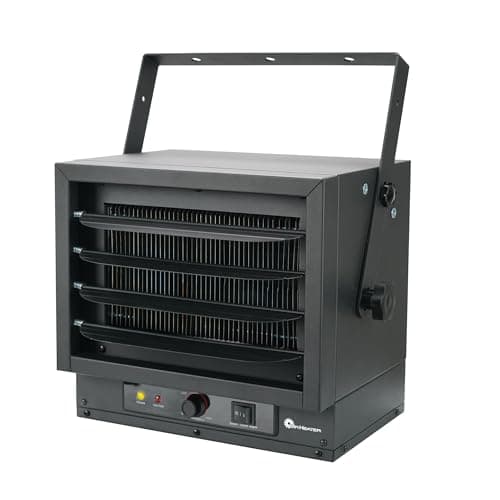
Mr. Heater 2VAHG5000 5,000/4,000/3,000W 240V Ceiling Heater
Three output levels from a brand with real parts support — and the thinnest spec sheet of any 240V heater here.
$129.00Amazon#ad · Price as of October 5, 2026 · Affiliate disclosure for the link to 2VAHG5000 5,000/4,000/3,000W 240V Ceiling Heater
Radiant heat, no electricity
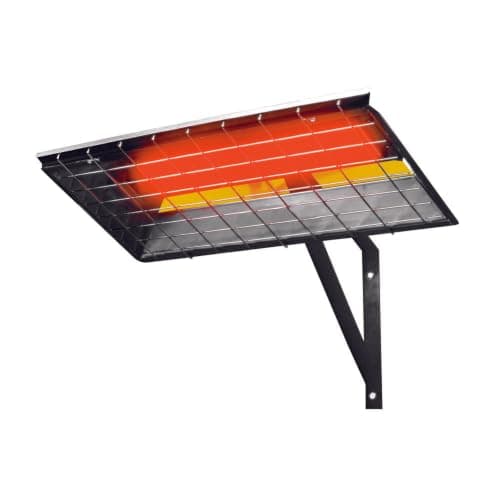
Heatstar MH25NG Radiant Overhead Natural Gas Heater
Radiant gas heat that needs no electricity and warms the slab rather than the air. Check your ceiling height against the published 7-9 ft range first.
$498.62Amazon#ad · Price as of October 5, 2026 · Affiliate disclosure for the link to MH25NG Radiant Overhead Natural Gas Heater
A real installation spec
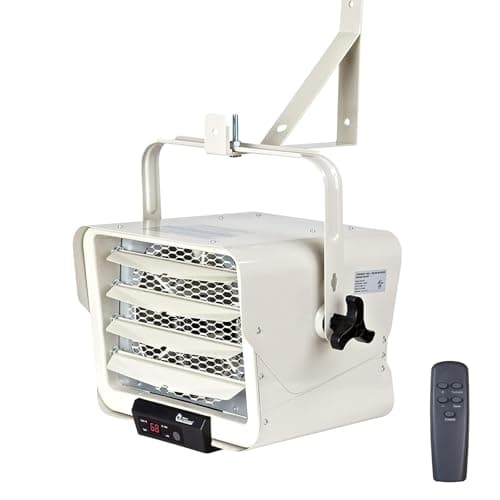
Dr. Infrared Heater DR-975 7,500W 240V Hardwired Heater
The 240V heater that tells you what the install needs: 8 AWG copper, two output levels and a real thermostat range. Budget for an electrician.
$240.00Amazon#ad · Price as of October 5, 2026 · Affiliate disclosure for the link to DR-975 7,500W 240V Hardwired Heater
Why these and not others: the selection criteria for this category.
Next
With the envelope fixed, size the heater from the insulated column on the garage heater sizing guide, check the running cost on garage heater running costs, and pick from the best garage heaters.
And if a heated garage is going to melt more snow off the car, garage floor mats for winter covers keeping that meltwater off your slab.
Questions people actually ask
What should I insulate first in a garage?
The door, and the gaps around it. A garage door is the single largest uninsulated surface in the building and its perimeter is usually the biggest air leak. Insulating and weatherstripping it is the highest-return work available, and it costs less than the difference in heater size it saves you.
How much does insulating a garage reduce the heater size?
Roughly half. The sizing guide puts an insulated 2-car garage at around 17,000 BTU and an uninsulated one in a cold climate at around 30,000 — and the running hours fall by a similar proportion.
Do I need to insulate the garage ceiling?
If there is living space above, it is probably already insulated from that side. If it is an attic or a roof, yes — heat rises, so an uninsulated ceiling is where you lose the heat you just made. This is usually the second job after the door.
Should I insulate the slab?
You cannot easily insulate an existing slab, and that is why a garage floor is always cold. A radiant heater warms the slab directly, which is one argument for radiant over forced air. Short of that, a containment mat and a rubber anti-fatigue mat where you stand are the practical fixes.
Will insulating cause condensation problems?
Insulation itself does not, but sealing a garage tightly and then running a vent-free gas heater does — all that combustion moisture has nowhere to go. If you seal the garage, heat it with electric or vented gas, not vent-free.
Sources
- Heatstar MH25NG listing — Published 7-9 ft mounting height range — the figure that makes radiant heat a ceiling-height decision.
- Mr. Heater F299731 vent-free listing — Vent-free natural gas heater — the product whose combustion moisture makes the condensation discussion below matter.
Read next
- What Size Heater Do You Need for a Garage?A BTU-by-square-footage-and-insulation table, cross-checked against each heater's own published coverage figure, with the electric equivalents in watts.
- Garage Heater Running CostsEnergy consumed per hour by fuel and output, derived from published specs, plus the three things that cut running cost more than fuel choice does.
- Is a Garage Heater Worth It?A direct answer in 50 words, then the four conditions that make a heater worth it and the two situations where the money goes further elsewhere.
- The Best Garage HeatersTen heaters across electric, propane and gas, ranked on published output against coverage and on what the install actually requires.
- Garage Heater vs Mini-SplitWhere a mini-split beats a dedicated garage heater, where it does not, and the insulation requirement that decides it.
- Garage Floor Mats for WinterWhy road salt damages concrete, how containment mats prevent it, how to size and maintain one, and how it fits alongside heating and a coating.
- Two-Car Garage SetupA complete two-car garage plan — 27,000 lumens, a 4x8 overhead rack, a 48-60 inch bench, a documented chest and the right heater size.