Garage Heaters
Is a Garage Heater Worth It?
Yes, if you use the garage for more than parking during cold months. No, if the garage is uninsulated — in which case the same money buys insulation and a better result.
By Mike M. · Published October 5, 2026
The short answer
Yes — if you use the garage for anything beyond parking during cold months, a heater converts four or five unusable months into usable ones, and that is the whole value. No — if the garage is uninsulated, because heating a space that loses heat as fast as you add it is the most expensive mistake available here, and the same money spent on insulation produces a better result.
The four conditions that make it worth it
1. You actually use the garage for something
The value of a garage heater is measured in usable months, not in degrees. If the garage is a workshop, a gym, a hobby space or somewhere you do real work, then four or five months of the year it is currently too cold to use properly — and a heater gets those months back.
If the garage is where the car sleeps, a heater buys you a slightly warmer car in the morning, which is not worth an electrician.
2. The garage is insulated, or you will insulate it
This is the one that disqualifies most people, and it is worth taking seriously. An uninsulated garage — bare walls, an uninsulated sectional door, gaps around that door — loses heat roughly as fast as a reasonably sized heater can add it.
The sizing table shows the cost of skipping this: an uninsulated 2-car garage needs roughly double the heater of an insulated one, and runs it roughly twice as long. Insulation is cheaper than that difference. See how to insulate a garage for heating.
3. You have the supply, or can get it
A heater you cannot feed is worth nothing. 5,000W at 240V is roughly a 30A circuit; VEVOR publishes ≥42A for its 10,000W unit; a gas heater needs a line and a flue.
Check your garage subpanel's spare capacity first. If there is none and no gas line, the realistic options are portable propane with the door open or a 1,500W comfort zone — both of which are fine answers, just different ones.
4. The running cost fits how you will use it
A 5,000W electric heater consumes 5 kWh per hour at full output. If you will run it eight hours a weekend through winter, multiply that out against your own rate before you commit — and consider whether gas, at 80-83% efficiency on cheaper fuel, pays back its larger install cost over those hours.
The benefit nobody mentions: condensation
Rust in a garage is not caused by cold, it is caused by condensation — warm humid air meeting cold metal. Which is why tools rust most in spring, not in January: the air warms up faster than the steel does.
A garage held even a few degrees above ambient has substantially less condensation, because the metal is never the coldest thing in the room. That means fewer rusty tools, cast iron that stays clean, a car that dries rather than sitting wet, and a bench top that does not swell.
One important caveat: this only applies to heating that does not ADD moisture. A vent-free gas heater puts all its combustion water vapor into the garage, which makes condensation worse, not better. Electric and vented gas add none.
The two situations where it is not worth it
The garage is uninsulated and will stay that way
Covered above and worth repeating because it is the common case. You will spend on the heater, spend on the install, spend on running it, and still have a cold garage — because the heat leaves as fast as you make it.
What to buy instead: insulation for the garage door, weatherstripping for its perimeter, and a 1,500W infrared heater over the bench. That combination costs a fraction and makes the garage genuinely more usable.
You use the garage a handful of times in winter
A permanent install does not pay back for six afternoons a year, and the install cost is usually the larger number.
What to buy instead: a portable propane heater for fast heat with the door open — see the best propane garage heaters — or a 1,500W comfort heater. Both are instantly available and neither needs a trade.
The cheapest thing that actually works
Worth stating plainly, because it is the answer for a lot of people and nobody recommends it: a 1,500W infrared heater mounted over the bench.
Dr. Infrared publishes 150 sq ft of coverage for 1,500W, which is honest and is also exactly the area around a workbench. Heat Storm's Tradesman weighs under four pounds and mounts on two screws. Neither heats the garage; both make the three feet where you stand comfortable, for 1.5 kWh an hour and no install cost.
For an hour of bench work, that beats heating the whole building by a factor of four or five on running cost. See the best 120V garage heaters.
The three honest options
A real heater, a comfort zone, and a session heater
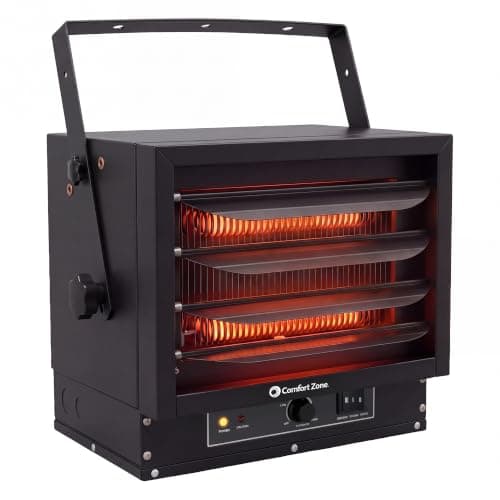
Comfort Zone's 5,000W is the lowest-cost proper heater for an insulated 2-car garage. Dr. Infrared's 1,500W publishes an honest 150 sq ft and costs nothing to install. InoKraft's thermostatted propane is the answer for occasional use with the door open.
A 2-car garage on 240V
Comfort Zone CZ220 5,000W Ceiling Mount Heater
The sensible 240V size for a typical insulated 2-car garage, at the lowest price here. Knobs instead of a digital thermostat is the compromise.
$96.00Amazon#ad · Price as of October 5, 2026 · Affiliate disclosure for the link to CZ220 5,000W Ceiling Mount Heater
A published coverage figure
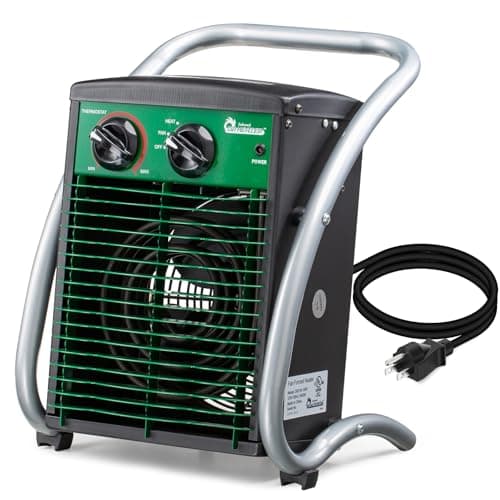
Dr. Infrared Heater DR218 1,500W Infrared Heater
The honest 120V option: it publishes a 150 sq ft coverage figure instead of pretending a wall outlet can heat a garage.
$100.74Amazon#ad · Price as of October 5, 2026 · Affiliate disclosure for the link to DR218 1,500W Infrared Heater
A thermostat on propane
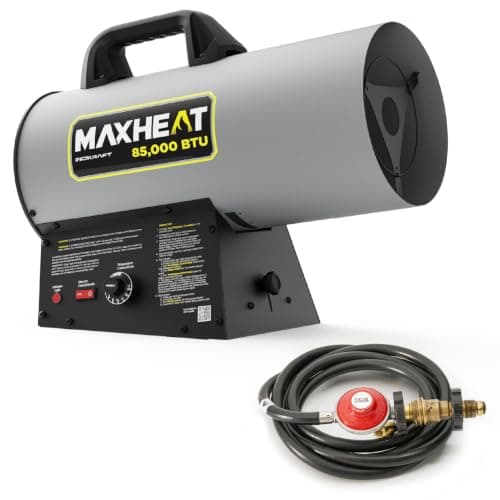
InoKraft MAXHEAT MH85 85,000 BTU Propane Heater
The portable propane heater with an actual thermostat and a CSA listing. It cycles instead of blasting, which is what makes it usable for a whole afternoon.
$219.99Amazon#ad · Price as of October 5, 2026 · Affiliate disclosure for the link to MAXHEAT MH85 85,000 BTU Propane Heater
Why these and not others: the selection criteria for this category.
If the answer is yes
Size it on the garage heater sizing guide, price the running cost on garage heater running costs, and then choose from the best garage heaters.
And whatever the answer, insulate. It makes the heater smaller, the running cost lower and the garage better even unheated. How to insulate a garage for heating.
Questions people actually ask
Is a garage heater worth the money?
If you use the garage for anything beyond parking during cold months, yes — a heater turns four or five unusable months into usable ones. If the garage is uninsulated, spend the money on insulation first: heating a space that loses heat as fast as you add it is the most expensive mistake in this category.
How much does it cost to heat a garage?
Depends on fuel, size and insulation. A 5,000W electric heater consumes 5 kWh per hour at full output; a 45,000 BTU gas unit heater at 80% efficiency consumes about 0.56 therms per hour. Multiply by your own rates — the arithmetic is on garage heater running costs.
Will a heater stop my tools rusting?
Indirectly, and this is an underrated benefit. Rust happens when warm humid air meets cold metal and condenses. A garage held a few degrees above ambient has far less condensation — which means fewer rusty tools, cleaner cast iron and a car that dries instead of sitting wet.
Is it cheaper to heat the garage or just dress warmly?
For an hour of bench work, a 1,500W infrared heater aimed at where you stand costs 1.5 kWh and beats both. Dressing warmly fails for precision work, because you cannot do fine work in gloves. The cheap answer is usually a comfort heater, not a garage heater.
What if I only use the garage occasionally in winter?
Then a portable propane heater (fast heat, door open, nothing installed) or a 1,500W comfort heater over the bench. A permanent installation does not pay back for a handful of afternoons a year, and the install cost is the bigger number.
Sources
- Dr. Infrared DR218 listing — Published 150 sq ft coverage at 1,500W — the honest figure behind the cheapest option discussed here.
- Comfort Zone CZ220 listing — 5,000W 240V ceiling-mount, the lowest-cost hardwired option for an insulated 2-car garage.
Read next
- How to Insulate a Garage for HeatingWhere heat leaves a garage, the order to fix it in, and how much insulating changes the heater you need — plus the ceiling-height problem.
- Garage Heater Running CostsEnergy consumed per hour by fuel and output, derived from published specs, plus the three things that cut running cost more than fuel choice does.
- The Best Garage HeatersTen heaters across electric, propane and gas, ranked on published output against coverage and on what the install actually requires.
- What Size Heater Do You Need for a Garage?A BTU-by-square-footage-and-insulation table, cross-checked against each heater's own published coverage figure, with the electric equivalents in watts.
- The Best 120V Garage HeatersPlug-in 1,500W heaters compared on published coverage, IP rating and mounting — framed honestly as comfort zones rather than garage heating.
- Garage Floor Mats for WinterWhy road salt damages concrete, how containment mats prevent it, how to size and maintain one, and how it fits alongside heating and a coating.
- Garage Setup Under $1,000The full working-garage build: light, wall storage, an overhead rack, a 48-inch bench and a chest publishing 100 lb per drawer.