Garage Heaters
What Size Heater Do You Need for a Garage?
A table by square footage and insulation level, cross-checked against what the heaters themselves publish — because an oversized gas heater short-cycles and an undersized electric one never catches up.
By Mike M. · Published October 5, 2026
The short answer
| Garage | Insulated | Poorly insulated | Uninsulated, cold climate |
|---|---|---|---|
| 1-car (~250 sq ft) | ~10,000 BTU / 3,000W | ~13,000 BTU / 4,000W | ~17,000 BTU / 5,000W |
| 2-car (~450 sq ft) | ~17,000 BTU / 5,000W | ~25,000 BTU / 7,500W | ~30,000 BTU / 45,000 BTU gas |
| 2.5-car (~550 sq ft) | ~22,000 BTU / 7,500W | ~30,000 BTU / 10,000W | ~45,000 BTU gas |
| 3-car (~700 sq ft) | ~28,000 BTU / 10,000W | ~40,000 BTU / 45,000 BTU gas | ~50,000-60,000 BTU gas |
The quickest way to read that table: an insulated 2-car garage wants 5,000W of electric or around 17,000 BTU, and an uninsulated one in a cold climate wants a gas unit heater. The gap between those two columns is the argument for insulating.
Cross-check: what the makers publish
Published coverage figures vary widely between products, and the variation is informative rather than random.
| Heater | Output | Published coverage | BTU per sq ft implied |
|---|---|---|---|
| Dr. Infrared DR218 | 1,500W (~5,100 BTU) | 150 sq ft | ~34 |
| Dura Heat EUH1500 | 5,120 BTU | 250 sq ft | ~20 |
| VEVOR 10,000W | 10,000W (~34,100 BTU) | ~970 sq ft | ~35 |
| Heatstar MH25NG radiant | — | 500-600 sq ft | — |
| Mr. Heater F260550 | 50,000 BTU | 1,667 sq ft | ~30 |
| Mr. Heater F260560 | 80,000 BTU | 2,667 sq ft | ~30 |
| InoKraft MH85 propane | 85,000 BTU | 2,000 sq ft | ~43 |
| Remington 60,000 BTU | 60,000 BTU | 1,500 sq ft | ~40 |
| VEVOR 60,000 BTU | 60,000 BTU | 1,400 sq ft | ~43 |
Two things fall out of that. The vented unit heaters assume about 30 BTU per square foot, which is an insulated-space assumption. The portable propane heaters assume 40-43, which is more conservative — appropriate, because they are designed for construction sites with doors open.
Dura Heat's 20 BTU per square foot is the outlier and reads as the most conservative figure in the category, which fits a product that also publishes a real BTU number rather than just watts.
The four variables that change the answer
1. Insulation — the big one
The difference between the first and last columns of the table above is roughly a factor of two. An uninsulated garage needs twice the heater of an insulated one, and runs it twice as long.
The garage door is usually the single biggest loss — a large uninsulated panel with gaps around it. Insulating the door and sealing its perimeter is the highest-return work available, and it is cheaper than the difference in heater size. See how to insulate a garage for heating.
2. Ceiling height
The table assumes 8-9 feet. A 12-foot ceiling is roughly 40% more air volume for the same floor area, so scale up — and note that heat stratifies, so a tall garage wants either a ceiling fan to push warm air down or a radiant heater that warms surfaces rather than air.
Heatstar's radiant unit publishes a 7-9 ft mounting height range, so in a tall garage it is simply the wrong product. Layouts for tall garages are on the high-ceiling garage page.
3. Climate
The bands above assume a moderate-to-cold winter. In a genuinely cold climate — sustained sub-zero — go up a column. In a mild one, down.
4. What you want from it
Holding a garage at 55°F all winter is a different job from raising it from 20°F to 60°F in thirty minutes. The table sizes for holding temperature; for fast recovery, size up or accept waiting.
This is also the argument for multi-level output: Mr. Heater's 2VAHG5000 offers 5,000 / 4,000 / 3,000W, so you can size for the cold snap and run low the rest of the time.
Why oversizing a gas heater is a real mistake
With electric, oversizing mostly wastes capital — the thermostat cycles it off and a multi-level unit runs lower.
With gas it is worse. An oversized unit heater short-cycles: it fires, satisfies the thermostat quickly, shuts down, and repeats. Each cycle is an ignition event, and ignition is where these units wear out. It also feels drafty, because you get blasts of hot air rather than steady warmth.
So for gas, size it properly rather than generously. Mr. Heater's 50,000 BTU unit publishes 1,667 sq ft — in a 450 sq ft two-car garage that is substantially oversized, and the 45,000 BTU Modine or a smaller unit is the better fit.
The right heater for each size
One heater per row of the table
Comfort Zone's 5,000W for an insulated 2-car garage, Dr. Infrared's 7,500W for a poorly insulated one, the Modine 45,000 BTU for an uninsulated 2-car or an insulated 3-car, and Mr. Heater's 50,000 BTU dual-fuel for a 3-car bay.
A 2-car garage on 240V
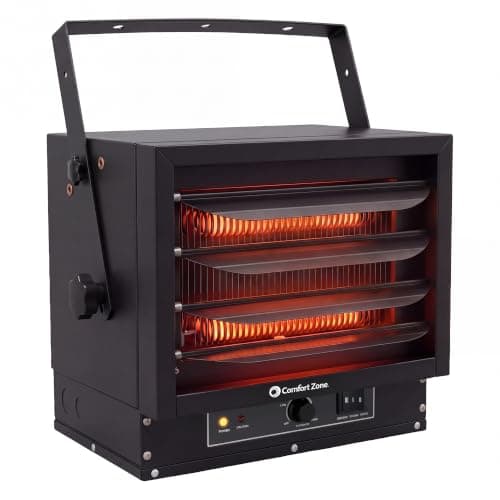
Comfort Zone CZ220 5,000W Ceiling Mount Heater
The sensible 240V size for a typical insulated 2-car garage, at the lowest price here. Knobs instead of a digital thermostat is the compromise.
$96.00Amazon#ad · Price as of October 5, 2026 · Affiliate disclosure for the link to CZ220 5,000W Ceiling Mount Heater
A real installation spec
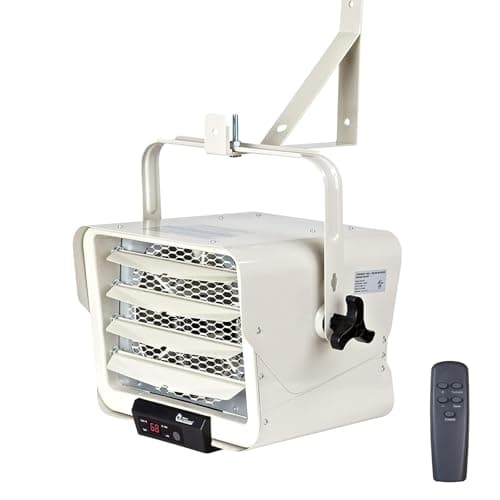
Dr. Infrared Heater DR-975 7,500W 240V Hardwired Heater
The 240V heater that tells you what the install needs: 8 AWG copper, two output levels and a real thermostat range. Budget for an electrician.
$240.00Amazon#ad · Price as of October 5, 2026 · Affiliate disclosure for the link to DR-975 7,500W 240V Hardwired Heater
The garage-heating standard
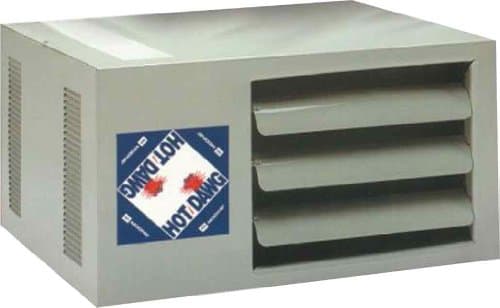
Modine Hot Dawg HD45 45,000 BTU Natural Gas Heater
The default for a reason: a published 80% efficiency, a low profile that fits a real garage ceiling, and a service network that actually exists.
$1,094.51Amazon#ad · Price as of October 5, 2026 · Affiliate disclosure for the link to Hot Dawg HD45 45,000 BTU Natural Gas Heater
A permanent vented install
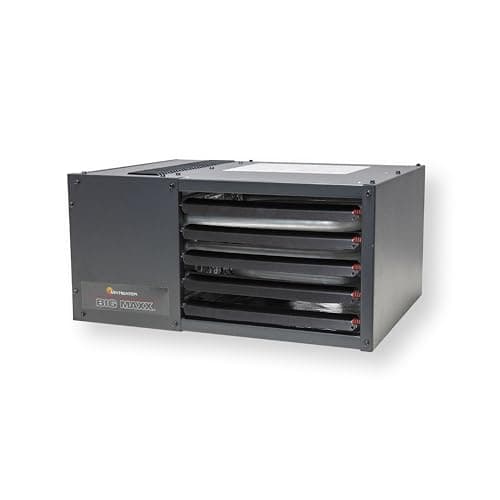
Mr. Heater F260550 50,000 BTU Unit Heater (LP or Natural Gas)
The right answer if you want the garage warm all winter: a vented, thermostatted unit heater that takes any 24V thermostat. It needs gas, a vent and a contractor.
$449.99Amazon#ad · Price as of October 5, 2026 · Affiliate disclosure for the link to F260550 50,000 BTU Unit Heater (LP or Natural Gas)
Why these and not others: the selection criteria for this category.
Next
Having sized it, price the running cost on garage heater running costs — the figure that often changes the fuel decision — and then pick from the best garage heaters.
And if the table has told you that your uninsulated garage needs a gas unit heater, read how to insulate a garage for heating first. Insulating down a column is cheaper than heating up one.
Questions people actually ask
What size heater do I need for a 2-car garage?
For a roughly 400-500 sq ft insulated garage: 5,000W on 240V electric, or 45,000-60,000 BTU on gas. Uninsulated, add roughly half again. The table below works through it by insulation level.
How many BTU per square foot for a garage?
Roughly 30-45 BTU per square foot for an insulated garage in a moderate climate, 45-60 for a poorly insulated one, and 60+ for an uninsulated garage in a cold climate. Those bands are what the table below uses, and they match the coverage figures the heaters publish.
Is it bad to oversize a garage heater?
For gas, yes — an oversized unit heater short-cycles, which wears the ignition and feels drafty because it blasts and stops rather than holding steady. For electric with multiple output levels it matters less, because you can run it at a lower setting.
Why do the published coverage figures vary so much?
Because the makers assume different conditions. Portable propane heaters are specified for construction sites with the doors open, so Remington publishes 1,500 sq ft for 60,000 BTU. A vented unit heater assumes a closed insulated space, so Mr. Heater publishes 1,667 sq ft for 50,000 BTU. Read them as approximate.
Does ceiling height matter?
Yes. The square-footage figures assume roughly an 8-9 ft ceiling. A garage with a 12 ft ceiling has 40% more air volume to heat, so add accordingly — and note that Heatstar's radiant heater publishes a 7-9 ft mounting range and is simply the wrong product above that.
Sources
- Mr. Heater F260550 listing — Published 50,000 BTU heats up to 1,667 sq ft — approximately a 3-car garage per the maker.
- Mr. Heater F260560 listing — Published 80,000 BTU heats up to 2,667 sq ft.
- VEVOR 10,000W listing — Published ~970 sq ft coverage at 10,000W, with a ≥42A breaker requirement.
- Heatstar MH25NG listing — Published 500-600 sq ft coverage (a 2.5-car garage) and a 7-9 ft mounting height range.
Read next
- The Best Garage HeatersTen heaters across electric, propane and gas, ranked on published output against coverage and on what the install actually requires.
- How to Insulate a Garage for HeatingWhere heat leaves a garage, the order to fix it in, and how much insulating changes the heater you need — plus the ceiling-height problem.
- Garage Heater Running CostsEnergy consumed per hour by fuel and output, derived from published specs, plus the three things that cut running cost more than fuel choice does.
- The Best Electric Garage HeatersSeven 240V electric heaters compared on published output, breaker and wire requirements, thermostat range and mounting options.
- Electric vs Gas Garage HeatersElectric and gas compared on install requirements, published efficiency, running cost, safety and what each one does to the air in your garage.
- Two-Car Garage SetupA complete two-car garage plan — 27,000 lumens, a 4x8 overhead rack, a 48-60 inch bench, a documented chest and the right heater size.
- Three-Car Garage SetupA three-car garage plan built around zoning: a dedicated work bay, a storage wall, 42,000 lumens and the gas-heater threshold.