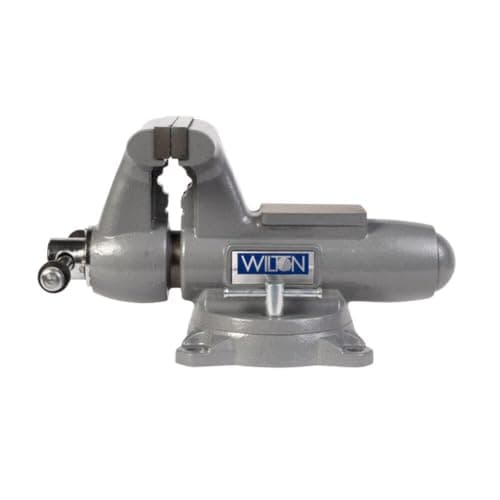
A bench without a vise is a table. Metalworking vises and woodworking front vises do different jobs and are not interchangeable — here is how to pick the right kind first.
Heads up: buy through a link here and we earn a commission from Amazon, at no extra cost to you. It never changes which product we rank first — how that works.
The short answer
Buy a 6-inch metalworking vise with a swivel base first — it holds, files, cuts and has an anvil face for hammer work. A woodworking front vise is a separate purchase for a separate job, and it needs a bench with a thick solid front apron to bolt into, which most steel garage benches do not have.
#ad · Prices come live from Amazon, last checked October 5, 2026, and vanish from this page rather than go stale. Scores are ours, compiled from published specs and warranty terms — not from testing we did not do. Tap a row for the full write-up.
Two completely different tools
The word 'vise' covers two products that share almost nothing. Getting this wrong is the most common mistake in the category, and it is an expensive one because neither converts to the other.
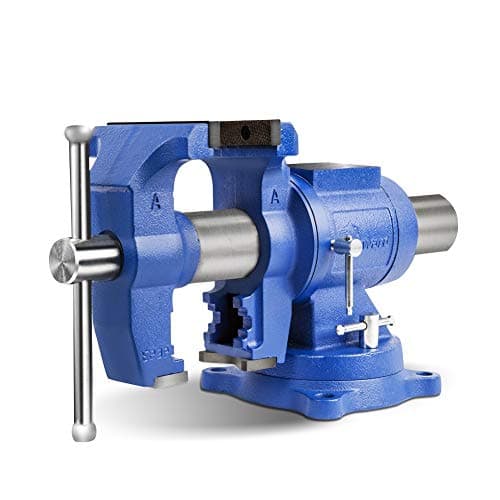
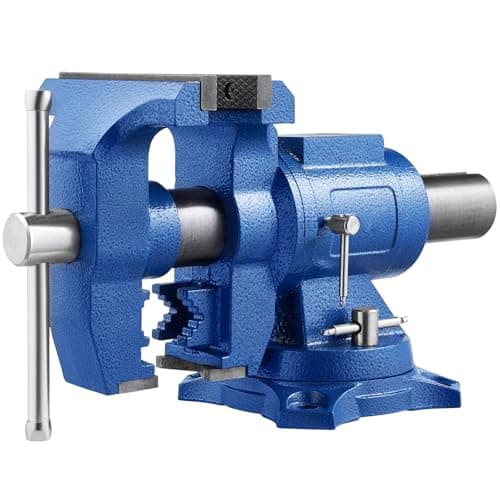
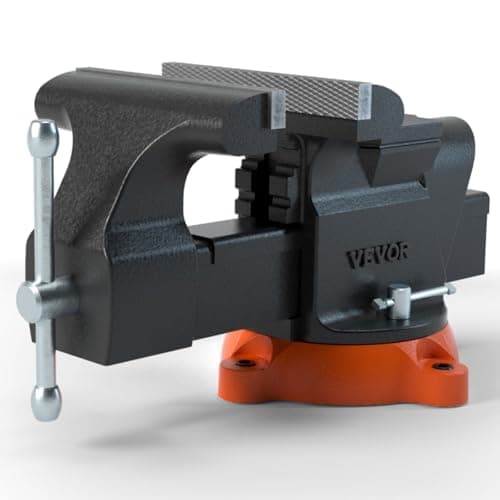
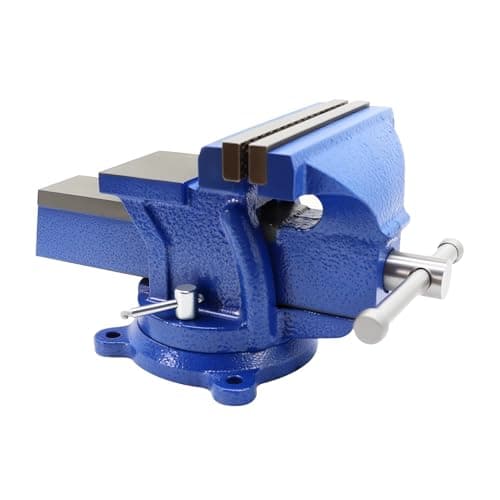
Metalworking vise
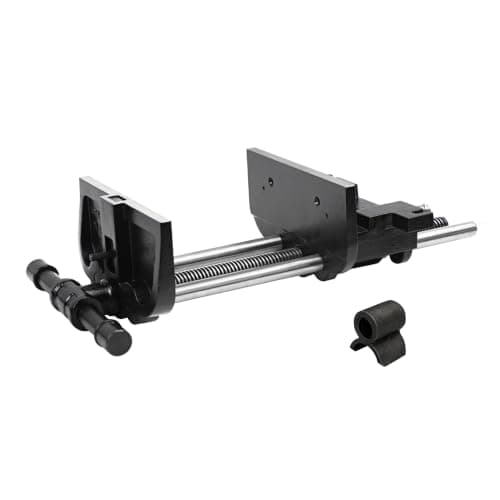
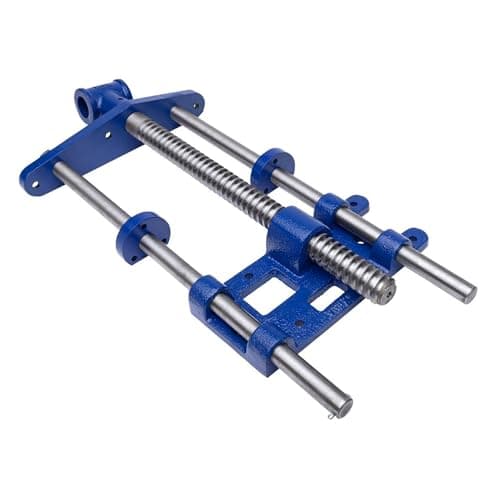
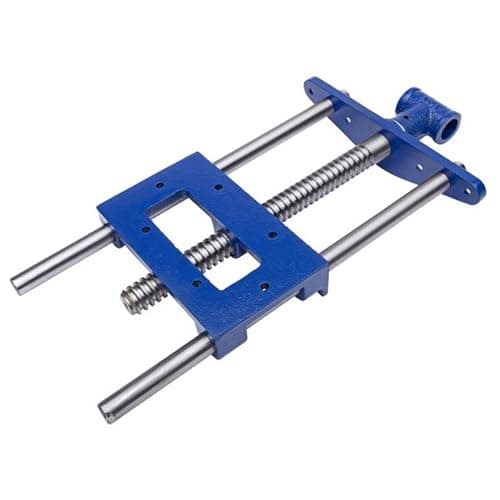
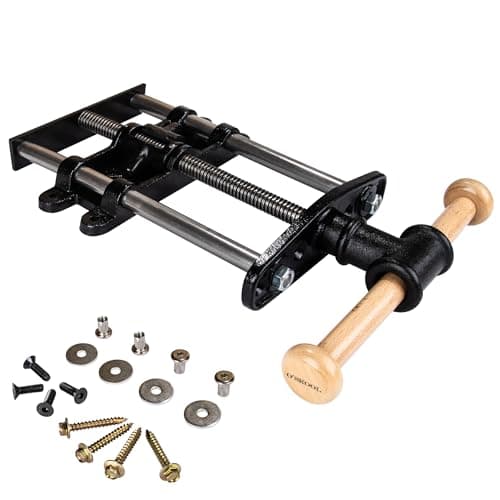
Woodworking front vise
Mounts
On TOP of the bench, bolted through
FLUSH with the bench's front apron
Jaw width
5-6 in. typical
9-10 in. typical
Jaw faces
Hardened steel, replaceable inserts
Takes wooden liners you fit yourself
Extras
Pipe jaws, anvil face, swivel base
Guide bars for parallel jaws, quick release
Marks the work?
Yes, deliberately — it grips
No, that is the point
Bench requirement
Any bench that takes a point load
A thick, solid front apron
Scroll the table sideways on a narrow screen.
If you work on car parts, bicycles, plumbing or anything metal: metalworking vise. If you build furniture, cabinets or anything where a dent in the workpiece ruins it: front vise. If both, buy both — a budget metalworking vise and a budget front vise together still cost less than one premium either.
Metalworking vises: what separates them
Jaw opening, not jaw width
Everyone compares jaw width, and almost every vise here is 6 inches. The spec that actually varies is how far the jaws open, and VEVOR is the only maker who publishes it: 5.9 inches on its 6-inch vise. That will take a 4x4 post, which means the vise is useful for timber as well as steel.
Replaceable jaw inserts
This is the difference between a tool and a consumable. Wilton's Apprentice has replaceable inserts and a service parts list behind it; the budget castings do not list any. Once you have chewed up a non-replaceable jaw — and you will, the first time you clamp something hard and crank too far — a vise without inserts is a vise you replace.
What the casting actually is
Here is the honest gap: not one vise here publishes a casting grade. 'Heavy duty cast iron' and 'ductile cast iron' appear in listings; neither is a specification. Ductile iron is genuinely tougher than gray iron, so a listing that says 'ductile' is telling you something — but without a grade you cannot compare two of them.
What that means practically: do not use the jaws of a budget cast-iron vise as an anvil, and do not extend the handle with a pipe to get more force. Both are how cheap castings crack. The vises with an integrated anvil face on the back — VEVOR's 6-inch — are telling you where to hit instead.
Woodworking front vises: the mounting problem
A front vise is a better tool than a metalworking vise for wood in every way, and most people cannot fit one, because it needs bolting into a thick solid front apron that steel cabinet benches do not have.
Check your bench before you buy. If the front edge is a folded steel lip or a 1-inch top with no apron beneath it, a front vise has nothing to grip. The benches that can take one are the solid-wood-top models — and honestly, the proper answer is a maple or rubberwood top on a base you build, which is covered on workbench top materials.
If you can fit one, the hierarchy is clear. Jorgensen's 10-inch quick-release publishes a 13-inch maximum opening and clamps in half a second, which compounds across a day of repeated clamping. Yost's F10WW is the same width without quick release and a fraction of the price. The F9WW is the cheapest way in.
Mounting a metalworking vise properly
A vise concentrates everything you do into a point load on the bench top, which is exactly what the capacity figures in this category do not describe. Three things matter:
Bolt through, do not screw into. Through-bolts with washers and nuts under the top. Lag screws into a 1-inch top will pull out eventually.
Mount at a corner or over a leg. Not in the middle of an unsupported span, where you are levering against the top's flex.
Spread the load. A steel plate or hardwood block under the top, under the vise base, spreads a point load across more of the surface. This is the step people skip and it is the one that stops a top deforming.
One consequence: a folding bench is not somewhere to mount a vise permanently. The WORX Pegasus and Keter benches in the small-garage roundup have integrated clamping instead for exactly this reason.
#ad · Price as of October 5, 2026 · Affiliate disclosure for the link to 6" Cast Iron Bench Vise
#9Best for the cheapest usable 6 in.
Nakkaa 6" Cast Iron Bench Vise
6.6/10our score, from published specs
The cheapest 6-inch vise worth bolting down. Fine for clamping; do not hammer on it and do not expect to pass it down.
What the maker publishes
6 in. jaw width, cast iron
360-degree swivel locking base
How it scores
Jaw width
8.0
Build
5.5
Serviceability
4.0
Brand support
4.5
Value
9.5
Where it wins
+The lowest price here for a full 6 in. jaw width
+Swivel lock rather than a thumb-screw friction base
+Does the job for occasional clamping without any ceremony
+Low enough cost to bolt one to a portable bench and forget it
Where it doesn’t
−Cast iron with no published grade is the definition of unknown impact strength
−No replaceable jaw inserts listed, so a chewed jaw is a chewed vise
−This is the tier that cracks if you use the jaws as an anvil
What else the bench needs
A vise plus a bench is most of a workstation. The remaining two things are light directly over the work — see the best garage lighting — and somewhere for the tools to live within arm's reach, which is the best pegboard for a garage.
A vise is also one of the best-value purchases in the garage, which is why it appears early in garage setup under $500.
Questions people actually ask
Which vise should I buy first?+
A 6-inch metalworking vise with a swivel base, if you do any kind of mechanical work. It holds, it cuts, it files, and the anvil on the back takes the hammer blows you should not put on the jaws. A woodworking front vise is a second purchase and a different job.
Can one vise do both metal and wood?+
Badly. A metalworking vise will mark wood unless you fit soft jaw liners every time, and its jaws are too narrow to clamp a board without denting it. A woodworking front vise has no pipe jaws and no anvil. If you do both seriously, you want both — they are cheap enough that this is a real option.
What jaw width do I need?+
Six inches is the standard for a garage metalworking vise and the size nearly everything here is built around. Jaw OPENING matters more than width for most jobs: VEVOR publishes 5.9 in. of opening on its 6 in. vise, which will take a 4x4. For woodworking, 9-10 in. of width spreads clamping pressure across a board instead of denting it.
Why do woodworking vises need a special bench?+
A front vise mounts flush with the bench edge so the bench itself supports long boards, which means bolting into a thick, solid front apron. Most steel cabinet benches do not have one. If you want a front vise, you are either buying a bench with a proper apron or building one — see workbench top materials.
Is a swivel head worth having?+
It lets you present awkward work at a sane angle instead of contorting around it, which is genuinely useful. The cost is rigidity: two rotating joints flex more than one, and both are places slop develops over years. Forward's DT150B swivels at both head and base; Wilton's Apprentice does not.
Sources
Wilton Apprentice WVA6 listing — 6 in. jaw width; Wilton's Apprentice line, a documented US bench-vise brand with a published catalog.