Garage Flooring
How to Prep a Garage Floor for Coating
Coatings do not fail because of the epoxy. They fail because of the slab underneath — and every one of those failures is preventable in a single day of work.
By Mike M. · Published October 5, 2026
The short answer
- Test the slab. Pour a cup of water on it. Beads = sealed, nothing will bond. Soaks in = good.
- Clear the garage completely and sweep, including the corners and along the walls.
- Degrease the stained areas full strength, scrub, dwell per the label, rinse.
- Degrease the whole floor diluted, scrub, rinse.
- Fill any cracks with a concrete repair product and let it cure fully.
- Etch with the kit's etch or a 3-in-1 prep. Follow the label dwell time.
- Rinse thoroughly — residue fights adhesion as much as the oil did.
- Dry completely, then do the plastic-sheet moisture test before you mix anything.
Why this page matters more than the product page
A mid-range epoxy on a properly prepped slab will outlast a premium epoxy on a badly prepped one, every time. Prep is the whole game, and it is also the part of the job nobody looks forward to, which is why it gets rushed.
The failure mode is specific and recognizable: the coating peels in sheets, usually where the car parks, usually three to twelve months later. It looks like a product defect and it almost never is.
Step 1: the water test
Before you buy anything. Pour a cup of water on the slab, somewhere representative, and watch.
- Soaks in within a minute or two, darkening the concrete. Bare, porous slab. Good — it will take a coating, and you should plan for the low end of any published coverage range because it will drink the first coat.
- Sits on the surface, beading. The slab is sealed, either by a curing compound from when it was poured or by a previous treatment. Nothing bonds to it. Your options are mechanical grinding, or tiles.
- Soaks in very slowly. Dense concrete. It will coat, but etch thoroughly and expect good coverage.
Then look, properly, at the whole floor. Cracks, spalling, flaking from an old coating, and any area that looks different from the rest. Rust-Oleum's 'good, sound condition' wording is not boilerplate — a coating over a failing surface fails with it.
Step 2: empty it and sweep it
Everything out, including shelving if it is in the way of the edges. Coating up to a shelf leg and then moving the shelf later gives you an uncoated rectangle.
Sweep thoroughly, then go round again with the corners and the wall line, which is where grit hides and where a coating is thinnest anyway. A shop vac beats a broom here.
Step 3: degrease, in two passes
Oil and grease soak into the pores of concrete and are completely invisible on a dry slab. This is the contamination that matters, and the only way to deal with it is chemically.
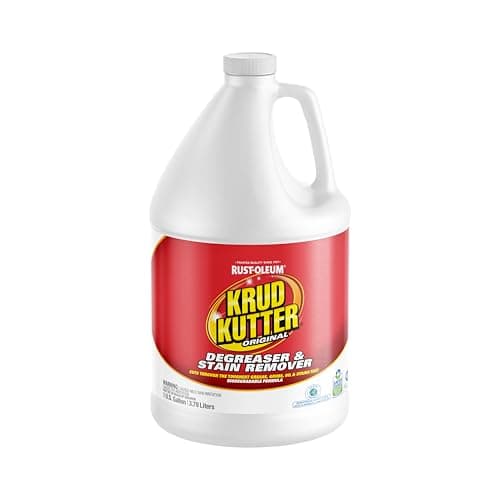
First pass, full strength on the bad spots. Krud Kutter is explicitly usable full strength and names tar and wax; Zep's citrus is the strongest here. Scrub with a stiff brush, let it dwell per the label, rinse.
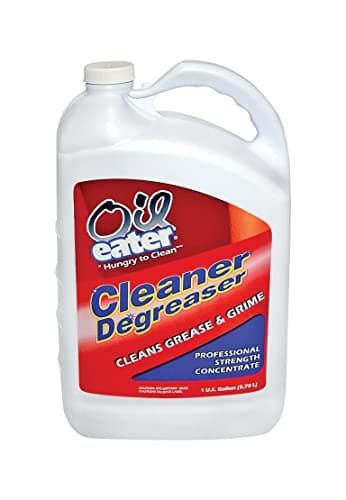
Second pass, diluted, across the whole floor. Oil Eater is the one to use here — ultra-concentrated, so a gallon makes a lot of working solution, and non-corrosive so it will not attack anything it splashes onto.
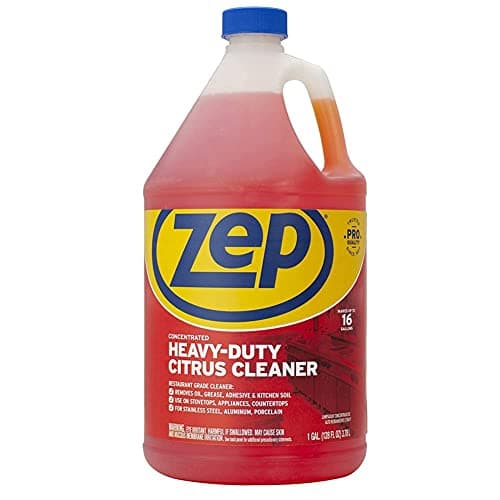
One warning worth repeating: Zep publishes a DO NOT USE list that includes auto paint. You are working in a room that normally contains a car. Move it, or be careful. Full product comparison on the best garage floor cleaners.
Step 4: fill the cracks
Before etching, not after. Fill cracks with a concrete repair product, work it in properly, and let it cure fully per its own instructions — which is usually longer than you want.
A coating over an unfilled crack telegraphs the crack within a season. A coating over a MOVING crack splits along it. If you have extensive cracking, or a crack that has clearly moved (one side higher than the other), that is a reason to choose tiles rather than fight it — see garage floor tiles vs epoxy.
Step 5: etch
Etching opens the surface profile. A smooth slab gives a coating nothing to key into; an etched slab feels like fine sandpaper and holds mechanically as well as chemically.
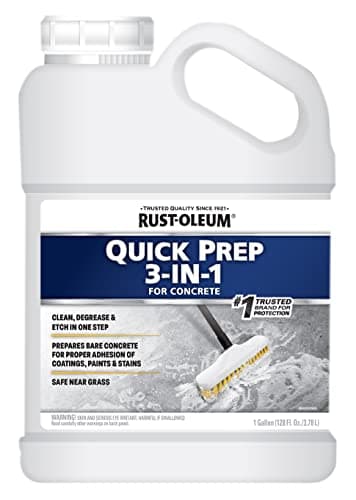
The good kits include etch — EpoxyShield, RockSolid and ArmorPoxy's 17-piece all do. If you bought material only, Rust-Oleum Quick Prep does clean, degrease and etch in one pass at 250 sq ft per gallon, which is the version of prep people actually complete rather than the version they plan.
Follow the label dwell time rather than the listing. Too short and the etch has not worked; too long and you can over-etch and weaken the surface.
Step 6: the moisture test
A dry-LOOKING slab is not a dry slab. Concrete passes vapor from the ground, and coating over a slab with moisture driving up through it is the second-biggest cause of peeling after poor cleaning.
The test: tape a two-foot square of clear plastic sheet to the slab, all four edges sealed, and leave it an hour or two. Condensation on the underside, or a darkened patch of concrete beneath it, means moisture is still coming through. Wait longer, improve ventilation, or run a dehumidifier — and if it never dries, you have a vapor problem that a coating will not survive.
Do this in a couple of places, including the spot closest to a wall or a door where water gets in.
The five mistakes
- Skipping the degrease because the floor looks clean. It is not; the oil is in the pores.
- Skipping the etch because the floor feels rough. Rough is not etched.
- Not rinsing enough. Residue is contamination.
- Coating too soon. Do the plastic-sheet test.
- Coating in the cold. Every published cure figure assumes the maker's recommended temperature; 45°F roughly doubles them and can prevent full cure entirely.
What you need
The prep products, in the order you use them
Degrease first with Krud Kutter or Zep full strength on the bad spots and Oil Eater diluted everywhere, then etch with Quick Prep. Quick Prep covers 250 sq ft per gallon, so a two-car garage needs two.
Prep before coating
Rust-Oleum Quick Prep 3-in-1 Cleaner, Degreaser and Etch, 1 Gallon
Buy this with any coating. Prep is why coatings fail, and three steps in one pass is the version of prep people actually complete.
$24.99Amazon#ad · Price as of October 5, 2026 · Affiliate disclosure for the link to Quick Prep 3-in-1 Cleaner, Degreaser and Etch, 1 Gallon
Oil stains on bare concrete
Oil Eater Original Cleaner and Degreaser, 1 Gallon
The degreaser to keep on the shelf: third-party classified, non-corrosive, and concentrated enough that one gallon lasts years.
$12.99Amazon#ad · Price as of October 5, 2026 · Affiliate disclosure for the link to Original Cleaner and Degreaser, 1 Gallon
Full strength on tar and wax
Krud Kutter Original Concentrated Cleaner Degreaser, 1 Gallon
The one to use full strength on the genuinely bad patches — tar and wax are named on the label — then diluted for everything else.
$16.98Amazon#ad · Price as of October 5, 2026 · Affiliate disclosure for the link to Original Concentrated Cleaner Degreaser, 1 Gallon
Knowing what NOT to use it on
Zep Heavy-Duty Citrus Degreaser Concentrate, 1 Gallon (ZUCIT128)
The strongest degreaser here and the only one that publishes what it will damage. Keep it away from paintwork and plastics.
$12.99Amazon#ad · Price as of October 5, 2026 · Affiliate disclosure for the link to Heavy-Duty Citrus Degreaser Concentrate, 1 Gallon (ZUCIT128)
Why these and not others: the selection criteria for this category.
Then coat it
With the prep done, the coating choice is a genuine preference rather than a gamble. The best garage floor coatings ranks them on cure schedule and coverage, and epoxy vs polyaspartic covers whether you want a topcoat.
One last point about timing: coat in mild weather. A day of good prep followed by a coating applied at 45°F is a day wasted.
Questions people actually ask
How do I know if my garage floor can be coated?
Pour a cup of water on it. If it soaks in within a minute or two and the concrete is free of cracks and spalling, it can be coated. If it beads on the surface, the slab is sealed and nothing will bond until the sealer is ground off. Rust-Oleum states its coatings need concrete in 'good, sound condition' and means it.
Do I have to etch, or can I just clean?
You have to etch. Cleaning removes contamination; etching opens the surface profile so the coating has texture to key into. They are different jobs and both are necessary. Rust-Oleum Quick Prep does both plus the cleaning in one pass.
How long should the floor dry before coating?
Overnight at minimum, longer in cool or humid weather. The test: tape a 2 ft square of plastic sheet to the slab for an hour or two. Condensation on the underside means moisture is still coming through and the floor is not ready.
What about cracks?
Fill them before coating with a concrete repair product, and let it cure fully. A coating over an unfilled crack telegraphs the crack within a season, and a moving crack will split the coating. Extensive cracking is a reason to choose tiles instead.
Can I pressure-wash instead of etching?
Pressure washing cleans and can open a very degraded surface slightly, but it is not a substitute for chemical etching on a smooth slab — and it floods the garage, which then has to dry completely. Degrease, etch, rinse, dry.
Sources
- Rust-Oleum EpoxyShield listing — States the product is for concrete in 'good, sound condition' and includes concrete etch in the kit.
- Rust-Oleum Quick Prep listing — Published 3-in-1 clean, degrease and etch; 250 sq ft per gallon; formulated to promote coating adhesion.
- Oil Eater listing — Non-corrosive, solvent-free, ultra-concentrated — the degreaser that will not attack an existing coating.
Read next
- The Best Garage Floor CleanersDegreasers and etch products compared on published coverage, concentration and — in one case — a published list of what it will damage.
- The Best Garage Floor CoatingsEight coatings compared on published coverage, cure schedule and solids content — plus why three days to vehicle traffic may rule out the cheapest.
- The Best Garage Floor Epoxy KitsNine epoxy kits compared on solids content, published coverage, cure time and whether etch, tools, flake and a topcoat are included.
- Garage Floor Tiles vs EpoxyA spec table on the same axes as the epoxy-vs-polyaspartic comparison, plus the water test on your own slab that settles the choice.
- What Does an Epoxy Garage Floor Cost?Cost per square foot by coating type, DIY versus professional, derived from each product's published coverage — plus the costs people forget.
- Garage Setup Under $2,500Where the big-ticket items compete: heating, a cabinet system and a floor coating, with an honest case for which two to choose.