Heads up: buy through a link here and we earn a commission from Amazon, at no extra cost to you. It never changes which product we rank first — how that works.
The short answer
Epoxy
Polyaspartic
Cure to vehicle traffic
24 h (100% solids) to 3 days (water-based)
48 h full service; recoat at 4-6 h
UV stability
Yellows in sunlight
UV-stable, tested against yellowing
Film build
Thicker — 5-6x floor paint on 100% solids
Thinner; it is a topcoat
Hot-tire resistance
Good on 100% solids
Excellent
Cost
Lower
Higher
Working time
Short on 100% solids
Very short — 30-50 min published
Used as
Basecoat or whole system
Topcoat over a basecoat
Color
Pigmented, chips and flake
Mostly clear; some with tint packs
Scroll the table sideways on a narrow screen.
They are not alternatives, mostly
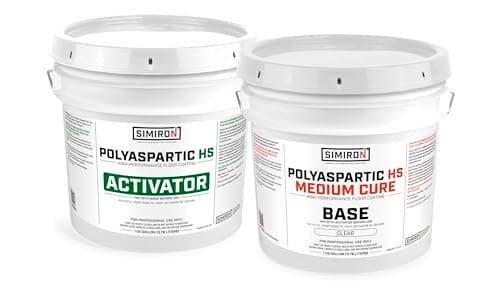
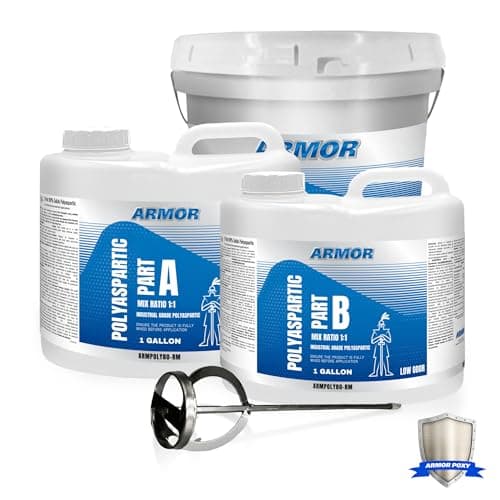
The framing of this comparison is a bit off, and correcting it makes the decision easier. Epoxy is a basecoat or a complete system. Polyaspartic, in every product on this site, is a topcoat — Simiron, ArmorPoxy and POURLA all describe theirs as going over a prepared basecoat.
So the real choice is not epoxy or polyaspartic. It is:
Epoxy alone — cheapest, thickest film, yellows in sun, slowest cure on the water-based versions.
Epoxy base plus polyaspartic top — what professional floors use. Thick, UV-stable, fast turnaround, two products and two sessions.
If budget allows only one, buy epoxy. If sunlight reaches your floor, find the budget for both.
The UV question is the real differentiator
Epoxy yellows under ultraviolet light. Not slowly — a gray epoxy floor with the garage door open all summer goes visibly amber within a season or two, and it does so unevenly, so the shaded areas stay gray and you get a line.
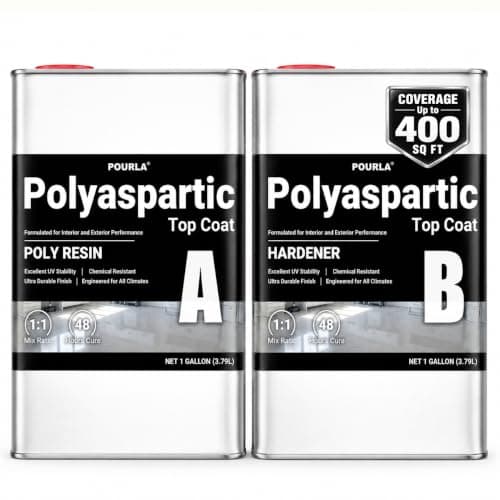
Polyaspartic does not. POURLA publishes that its formula is 'tested' to resist yellowing under UV exposure; Simiron publishes UV protection as the headline property of its high-solids topcoat.
So the test is simple: stand in your garage with the door open and see where the sunlight lands. If it reaches the floor, a polyaspartic topcoat is not a luxury — it is the difference between a floor that stays the color you chose and one that does not.
Speed: polyaspartic buys your garage back
The published numbers make this stark.
Product
Recoat
Foot traffic
Full service
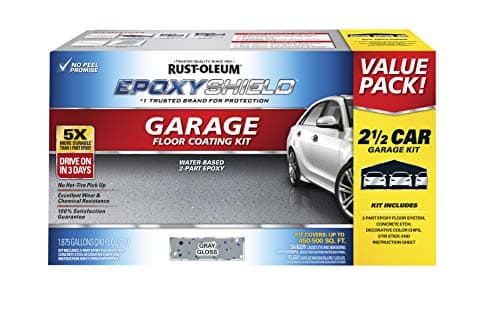
Rust-Oleum EpoxyShield
—
12-16 h
3 days
Rust-Oleum RockSolid
—
8-10 h
24-36 h
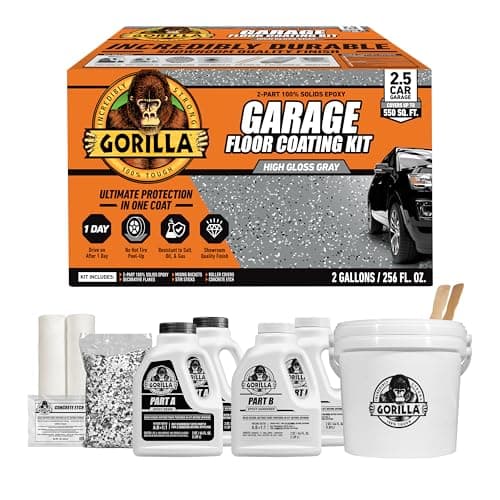
Gorilla 100% solids epoxy
—
—
24 h
ArmorPoxy fast-cure polyaspartic
4-6 h
12-24 h
48 h
POURLA polyaspartic
—
6-7 h walkable
24-48 h
Scroll the table sideways on a narrow screen.
The figure to notice is ArmorPoxy's 4-6 hour recoat window. That is what makes a two-coat system possible in one day: basecoat in the morning, topcoat in the afternoon, car back in the garage the day after tomorrow. A water-based epoxy on its own takes three days and gives you one coat.
Working time: the cost of speed
Fast cure means a short working window, and POURLA publishes the number nobody else does: 30-50 minutes. That is the whole pot life, from mixing to unusable.
Practical consequences:
Plan the floor in sections before you mix. Know exactly where you are starting and where you are stopping.
Have everything to hand. Roller loaded, tray filled, flake ready, exit route clear.
Get a second person. One mixing and feeding, one rolling.
Buy the right cure speed. Simiron sells fast, medium, slow and extra-slow versions specifically so you can match the product to your garage's temperature. A warm garage with a fast-cure product is how you end up with a half-rolled floor setting in the tray.
Cost, honestly
Polyaspartic costs more per square foot than epoxy, and because it is a topcoat you are buying two products. For a 400 sq ft garage that is a basecoat kit plus two gallons of topcoat.
What you get for it: UV stability, a faster return to service, better abrasion resistance, and a clear wear layer that protects the flake underneath. Whether that is worth it depends almost entirely on the sunlight question. The per-square-foot arithmetic is worked out on epoxy garage floor cost.
The recommendation
Sunlight on the floor, or need the car back fast? Epoxy base plus a polyaspartic topcoat. Simiron's high-solids topcoat for its four cure speeds, or ArmorPoxy's fast-cure for the 4-6 hour recoat.
No sunlight, normal timeline, want maximum durability for the money? A 100% solids epoxy on its own. See the best garage floor epoxy kits.
Tight budget, sound slab, car can live outside for three days? Rust-Oleum EpoxyShield, etch included.
Bad slab? Neither — tiles. No coating bonds to a cracked or sealed floor.
Published cure timeline: light foot traffic 12-16 hours, normal use 24-48 hours, full vehicle traffic 3 days
Kit includes the burst-pouch coating, decorative chips AND concrete etch
Applied with a synthetic nap roller in 4x4 ft sections
For concrete in good, sound condition
How it scores
Durability
7.0
Coverage
8.0
Cure speed
6.0
DIY friendliness
9.5
Value
9.0
Where it wins
+Publishes three separate cure milestones in hours, which is how you actually plan around a car
+Etch is in the box — the prep step everyone skips and the single biggest cause of coating failure
+Water-based, so cleanup is water and the fumes are tolerable in a closed garage
+The burst-pouch mixing design makes it hard to get the ratio wrong
Where it doesn’t
−Rust-Oleum states it plainly: concrete must be in good, sound condition. Spalled or previously sealed slabs need more work first
−Three days before you can park on it, which is the real cost of this product
−Water-based epoxy is thinner-building than a 100% solids system, so it is less forgiving of heavy wear
Next
If you are now leaning toward a two-coat system, the best garage floor epoxy kits covers the basecoats, including the two that already include a topcoat or a non-slip additive.
Polyaspartic resists UV and abrasion better; epoxy builds a thicker film. In a garage that gets direct sunlight, polyaspartic lasts visibly longer because epoxy yellows. Out of sunlight, a thick 100% solids epoxy is extremely durable. The system that lasts longest is an epoxy base with a polyaspartic topcoat.
Is polyaspartic worth the extra cost?+
If sunlight reaches your floor, yes — it is the only way to stop a coated floor going amber. If you need the car back in 48 hours rather than three days, also yes. If neither applies, a 100% solids epoxy is the better value.
Can I put polyaspartic over epoxy?+
Yes, and that is exactly what it is designed for. Simiron's and POURLA's products are explicitly topcoats for use over epoxy basecoats, flake or metallic systems. Epoxy base plus polyaspartic top is how most professional garage floors are actually built.
How fast is polyaspartic really?+
ArmorPoxy publishes a 4-6 hour recoat window, foot traffic in 12-24 hours and full service in 48 hours. POURLA publishes walkable in 6-7 hours and full cure in 24-48. Against EpoxyShield's three days to vehicle traffic, that is two days of your garage back.
Is polyaspartic harder to apply?+
Yes, and the working time is why. POURLA publishes a 30-50 minute window — the only product on this site that publishes pot life in minutes. Plan the floor in sections before you mix, work with a second person, and buy a slow-cure version if your garage is warm.