Heads up: buy through a link here and we earn a commission from Amazon, at no extra cost to you. It never changes which product we rank first — how that works.
The short answer
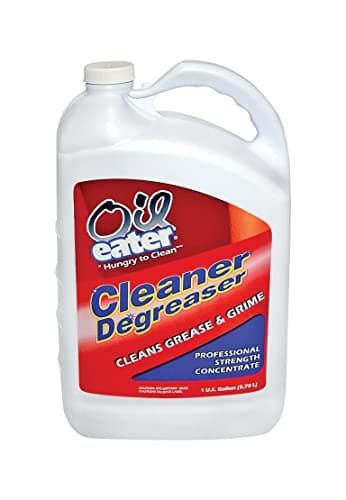
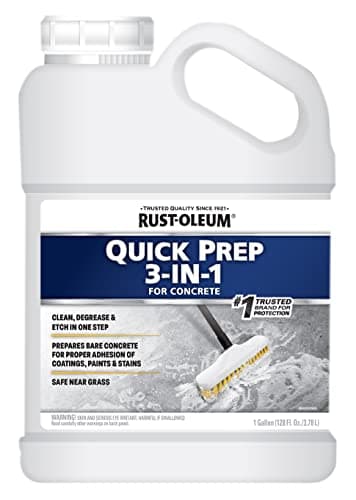
Buy Rust-Oleum Quick Prep if you are about to coat a floor: it cleans, degreases and etches in one pass at 250 sq ft per gallon, which is the version of prep people actually finish. For heavy oil staining, degrease first with Oil Eater — USDA-approved, non-corrosive and concentrated enough that one gallon lasts years — then etch.
#ad · Prices come live from Amazon, last checked October 5, 2026, and vanish from this page rather than go stale. Scores are ours, compiled from published specs and warranty terms — not from testing we did not do. Tap a row for the full write-up.
Why this page exists
Coatings do not fail because somebody chose the wrong epoxy. They fail because the slab was not prepped, and the failure arrives months later as peeling sheets where the car parks — by which point the shortcut has been forgotten.
There are two prep steps and both are necessary.
Degrease. Oil and grease soak into the pores of concrete and are invisible on a dry slab. Nothing bonds over them.
Etch. Acid or a prep chemical opens the surface profile so the coating has texture to key into. A smooth, sealed-looking slab gives a coating nothing to hold.
Most kits include etch — EpoxyShield, RockSolid and ArmorPoxy's 17-piece all do — and none includes a degreaser. So if your floor has oil stains, you are buying a product from this page regardless.
The 3-in-1 shortcut that is actually fine
Rust-Oleum's Quick Prep cleans, degreases and etches bare concrete in one step, covers 250 sq ft per gallon, and is made by the same company as the coating you are probably putting over it — so adhesion is the stated design goal.
Normally a product doing three jobs does all three adequately rather than any of them well. Here it is the right trade, because the alternative is three separate wet, messy passes across a garage floor, and the honest truth is that people who plan three passes do two.
Where it is not enough: heavy, old, soaked-in oil staining. For that, degrease separately and aggressively first, then use Quick Prep for the etch.
The degreasers, and what separates them
Product
Strength
Published credential
Safe on
Oil Eater
Strong, gentle on surfaces
USDA approved, food-service (A1, A4, A8)
Non-corrosive, solvent-free — safe on existing coatings
Oil Eater is the one to keep on the shelf. A USDA food-service classification is an actual third-party designation rather than a marketing phrase, and non-corrosive matters because it means you can use it on a finished floor without attacking the coating. Ultra-concentrated, so a gallon lasts years.
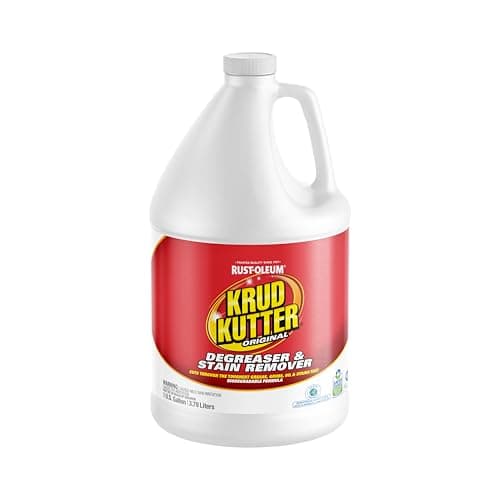
Krud Kutter names tar and wax specifically, which matters for a slab adjacent to a driveway. Usable full strength on the bad patches and diluted everywhere else, so one bottle does two jobs.
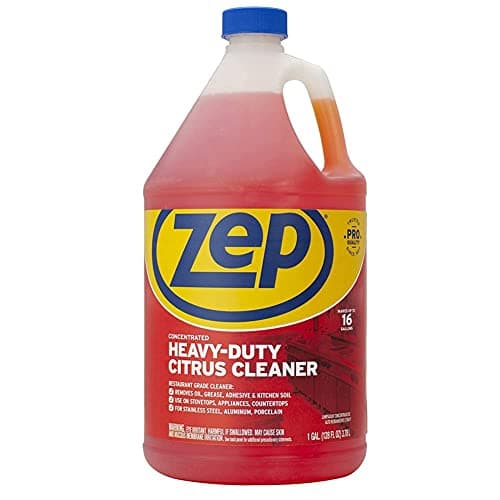
Zep's citrus degreaser is the strongest, and it is the only product here that tells you what it will damage.
Concentration is the value spec
All three degreasers are concentrates, which is why the price per gallon is misleading. Oil Eater describes itself as ultra-concentrated; Krud Kutter publishes a full-strength-to-diluted range; Zep is a restaurant-grade concentrate.
Practically, one gallon of concentrate is many gallons of working solution, and the dilution varies by job — full strength on an oil patch, heavily diluted for a general wash. That is why a gallon of degreaser lasts a garage years and a gallon of etch lasts one floor.
Doing it in the right order
Clear and sweep the floor completely. Everything out, including the shelving if it is in the way.
Degrease the stained areas full strength, scrub with a stiff brush, leave it to dwell per the label, rinse.
Degrease the whole floor diluted, scrub, rinse.
Etch, with Quick Prep or the etch from your coating kit. Follow the label dwell time, not the listing.
Rinse thoroughly. Residue from either step fights adhesion as effectively as the oil you just removed.
Let it dry completely. Overnight at minimum; longer in cool or humid weather. Tape a plastic sheet to the slab for an hour — condensation underneath means it is not dry.
Keep the Oil Eater. It is non-corrosive and solvent-free, which makes it the right routine cleaner for a coated or tiled floor — strong enough for a fresh oil drip, gentle enough not to attack the finish you just spent a weekend on.
And if the floor is going to live through winters, a containment mat keeps the road salt off it, which extends the life of any coating considerably.
The strongest degreaser here and the only one that publishes what it will damage. Keep it away from paintwork and plastics.
What the maker publishes
Citrus-based heavy-duty degreaser concentrate
For appliances, grills, concrete, tools, engines, fiberglass, aluminum, stainless steel
Explicitly NOT for glass, acrylic, plastics, auto paint, leather or natural stone
9 lb
How it scores
Effectiveness
9.5
Safety
6.5
Concentration
9.0
Spec transparency
9.5
Value
9.0
Where it wins
+Publishes a DO NOT USE list, which is more useful than another paragraph of what it does clean
+Citrus solvents cut heavy grease faster than water-based cleaners
+Restaurant-grade concentrate at a garage-aisle price
+Safe on aluminum, which many strong degreasers are not
Where it doesn’t
−That DO NOT USE list includes auto paint — so overspray near a car is a genuine risk
−Citrus solvents are strong-smelling in a closed garage
−No etching action
Questions people actually ask
What should I clean a garage floor with before coating it?+
Two steps. Degrease first — oil in the pores of the slab is invisible and will stop any coating bonding. Then etch, which opens the surface so the coating has something to key into. Rust-Oleum's Quick Prep does both plus the cleaning in one pass at 250 sq ft per gallon.
What is the best concrete degreaser?+
Oil Eater for general use — it is USDA-approved for food-service facilities, non-corrosive, biodegradable and ultra-concentrated, so a gallon lasts years diluted. Zep's citrus degreaser is stronger for the genuinely bad patches, and it is the only one here that publishes what it will damage.
Does a degreaser etch concrete?+
No, and this is the step people conflate. Degreasing removes contamination; etching opens the surface profile. You need both before a coating. Only Rust-Oleum's Quick Prep does both in one product.
How much do I need for a 2-car garage?+
Quick Prep covers 250 sq ft per gallon, so a 400-480 sq ft garage needs two gallons. The concentrated degreaters go much further — a gallon of Oil Eater diluted covers an enormous area, which is why it is the one to keep on the shelf.
Can I use these on an existing coating?+
Oil Eater is non-corrosive and solvent-free, so it will not attack an existing coating — which makes it the right choice for routine cleaning of a finished floor. Zep's citrus formula is stronger and its DO NOT USE list includes auto paint, so keep it away from a car and test it on a coating first.
Sources
Rust-Oleum Quick Prep listing — Published 3-in-1 clean, degrease and etch in one step, 250 sq ft per gallon coverage.
Oil Eater Original listing — Published USDA approval for food-service facilities (A1, A4, A8), biodegradable, non-corrosive, ultra-concentrated.